La solidez del color es un indicador clave que mide la capacidad de un textil para resistir factores externos y conservar su color original durante el procesamiento y el uso. Para las empresas textiles, la solidez del color no solo afecta directamente la apariencia del producto y la experiencia del consumidor, sino que también es un requisito fundamental de prueba en el comercio de exportación y la certificación de marca.
I. Solidez al lavado
1.1 Principios de prueba y base de las normas
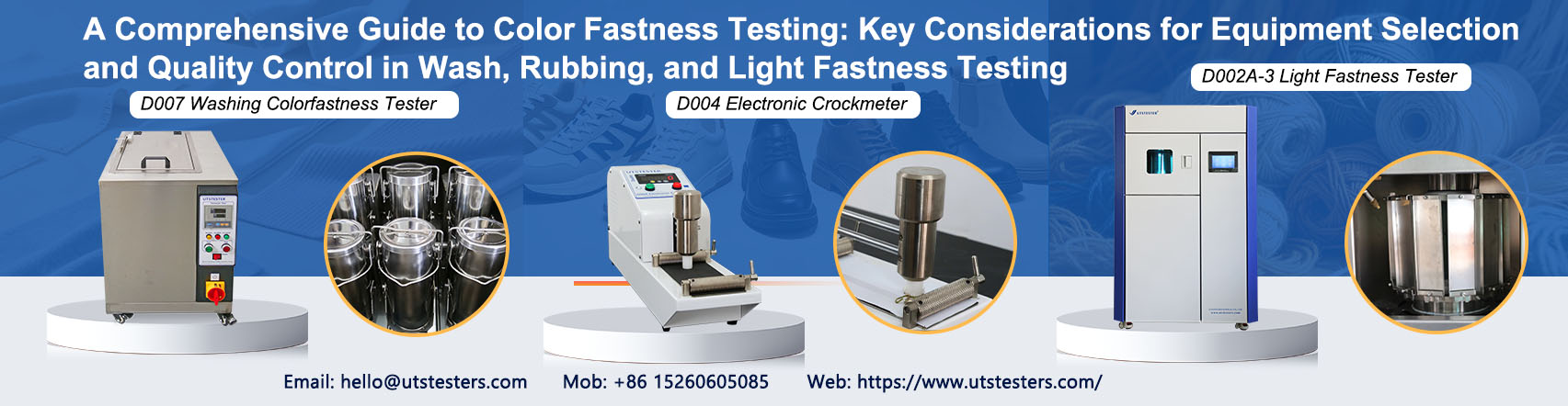
El concepto central de la prueba de solidez al lavado es el siguiente: después de coser la muestra de prueba a un tejido de respaldo estándar (como algodón, poliéster o lana), se somete a un lavado simulado en una solución de lavado a una temperatura específica y durante un tiempo determinado utilizando una formulación de detergente designada. Posteriormente, se evalúan el grado de cambio de color de la muestra de prueba y el grado de transferencia de color al tejido de respaldo. La clasificación se basa en el método de comparación con escala de grises, donde el Grado 1 es el peor y el Grado 5 es el mejor.
En China, la norma principal es GB/T 3921-2008 “Textiles—Pruebas de solidez del color—Solidez del color al lavado con jabón”, mientras que a nivel internacional se adoptan ampliamente las normas de la serie ISO 105 C y AATCC 61. Las diferentes normas varían en cuanto a temperatura de lavado, duración y formulaciones de detergente. Por ejemplo, GB/T 3921 especifica múltiples niveles de temperatura que van de 40°C a 95°C, mientras que AATCC 61 emplea un método de lavado acelerado que simula múltiples lavados domésticos reduciendo la duración y aumentando la temperatura.
1.2 Consideraciones clave para la selección de equipos
Precisión y uniformidad del control de temperatura: La temperatura de lavado es la variable principal que afecta los resultados de la prueba. Los equipos de alta calidad deben mantener una precisión de control de temperatura dentro de ±1°C, con una diferencia de temperatura no superior a 2°C en cualquier punto dentro del tambor. Algunos modelos económicos utilizan calentamiento por baño de agua, lo que presenta importantes fluctuaciones de temperatura y calentamiento desigual entre diferentes muestras de prueba. Esto puede causar especialmente desviaciones de datos en muestras con alta capacidad térmica, como chaquetas de plumón y tejidos pesados.
Velocidad de rotación del tambor y acción mecánica: Las normas especifican la velocidad de rotación del tambor (normalmente 40±2 r/min); las desviaciones de velocidad afectan directamente el grado de migración del tinte. Al seleccionar equipos, se debe verificar la estabilidad del sistema de accionamiento del motor y priorizar modelos con control de velocidad mediante frecuencia variable y control de circuito cerrado.
Capacidad de muestras y diseño de accesorios: Seleccione el número de tambores según el volumen diario de pruebas; las configuraciones comunes incluyen 6, 8 o 12 recipientes. Los accesorios deben permitir una carga y descarga rápida, garantizando al mismo tiempo que las muestras no se enreden ni se desplacen durante el proceso de lavado. Para tejidos estampados, asegúrese de que las muestras cubran todas las áreas de color; aumente el número de muestras si es necesario.
1.3 Puntos clave de control de calidad
La selección del entretelado debe cumplir estrictamente con la norma: las muestras de fibra pura deben utilizar entretelado fabricado con la misma fibra, mientras que las muestras de fibras mezcladas deben combinarse por separado según las fibras principales y secundarias. El pH de la solución de lavado, la concentración de detergente y la relación de baño (relación de volumen entre las muestras y la solución de lavado) deben controlarse con precisión. Además, el acondicionamiento de las muestras antes de la prueba (equilibrado bajo condiciones atmosféricas estándar durante al menos 4 horas) afecta directamente la consistencia de la clasificación final.
II. Solidez al frote
2.1 Diferencias entre frote en seco y frote en húmedo
La solidez del color al frote evalúa la capacidad de un textil para resistir la transferencia de color cuando se somete a frotes repetidos sobre una superficie seca o húmeda. Se divide en dos condiciones de prueba: frote en seco y frote en húmedo. El frote en seco simula la fricción entre prendas y entre prendas y la piel durante el uso diario; el frote en húmedo simula la fricción en ambientes sudorosos o húmedos y es especialmente importante para el denim oscuro y los tejidos de algodón teñidos con colorantes reactivos.
Durante la prueba, una tela blanca de algodón estándar para frote se fija al cabezal de frotamiento y se frota hacia adelante y hacia atrás sobre la superficie de la muestra de prueba 10 veces con una presión especificada (normalmente 9 N) y una longitud de recorrido (104 ± 3 mm). Después, el grado de transferencia de color a la tela de frote se evalúa mediante una escala de grises.
2.2 Consideraciones clave para la selección de equipos
Estabilidad de la presión y del recorrido: La presión aplicada por el cabezal de frotamiento sobre la muestra de prueba debe ser constante, y la consistencia del recorrido afecta directamente la repetibilidad de los resultados. Los modelos eléctricos ofrecen un mejor control de velocidad que los modelos accionados manualmente; se recomienda seleccionar un probador eléctrico de solidez del color al frote equipado con un contador electrónico que permite preestablecer el número de frotes y detiene automáticamente la prueba. Los modelos de doble estación pueden mejorar significativamente la eficiencia de prueba y son adecuados para el control de calidad diario en la producción masiva.
Material y tratamiento superficial del cabezal de frotamiento: Los cabezales de frotamiento estándar suelen ser pasadores cilíndricos de acero con un diámetro de 16 mm; sus superficies deben ser lisas y estar libres de rebabas. Ciertos materiales especiales (como cuero y tejidos recubiertos) pueden requerir el uso de cabezales de fricción redondos u otros accesorios especializados.
Capacidad de control de agua para el frote en húmedo: Las pruebas de frote en húmedo requieren la aplicación uniforme de una cantidad especificada de agua al paño de fricción (normalmente con un contenido de humedad del 95%–100%). El equipo debe estar equipado con un dispositivo preciso de dispensación de agua dosificada o instrucciones operativas claras para evitar fluctuaciones de resultados causadas por una distribución desigual del agua.
2.3 Puntos clave de control de calidad
La solidez al frote en húmedo de los tejidos de colores oscuros (especialmente negro, azul marino y rojo brillante) suele ser una fuente importante de reclamaciones de clientes. Durante la prueba se debe prestar especial atención: el paño de frote debe ser un tejido de algodón que haya pasado por desencolado, blanqueo y mercerización conforme a la norma; la superficie de la muestra de prueba debe estar plana y libre de arrugas, y en áreas estampadas se debe garantizar que todos los colores sean sometidos al frote; la clasificación debe realizarse bajo una fuente de luz estándar (como D65) para evitar desviaciones visuales causadas por la temperatura de color de la luz ambiental.
Ⅲ. Solidez al frote
3.1 Diferencias entre frote en seco y frote en húmedo
La solidez del color al frote evalúa la capacidad de un textil para resistir la transferencia de color cuando se somete a frotes repetidos sobre una superficie seca o húmeda. Se divide en dos condiciones de prueba: frote en seco y frote en húmedo. El frote en seco simula la fricción entre prendas y entre prendas y la piel durante el uso diario; el frote en húmedo simula la fricción en ambientes sudorosos o húmedos y es especialmente importante para el denim oscuro y los tejidos de algodón teñidos con colorantes reactivos.
Durante la prueba, una tela blanca de algodón estándar para frote se fija al cabezal de frotamiento y se frota hacia adelante y hacia atrás sobre la superficie de la muestra de prueba 10 veces con una presión especificada (normalmente 9 N) y una longitud de recorrido (104 ± 3 mm). Después, el grado de transferencia de color a la tela de frote se evalúa mediante una escala de grises.
3.2 Consideraciones clave para la selección de equipos
Estabilidad de la presión y del recorrido: La presión aplicada por el cabezal de frotamiento sobre la muestra de prueba debe ser constante, y la consistencia del recorrido afecta directamente la repetibilidad de los resultados. Los modelos eléctricos ofrecen un mejor control de velocidad que los modelos accionados manualmente; se recomienda seleccionar un probador eléctrico de solidez del color al frote equipado con un contador electrónico que permite preestablecer el número de frotes y detiene automáticamente la prueba. Los modelos de doble estación pueden mejorar significativamente la eficiencia de prueba y son adecuados para el control de calidad diario en la producción masiva.
Material y tratamiento superficial del cabezal de frotamiento: Los cabezales de frotamiento estándar suelen ser pasadores cilíndricos de acero con un diámetro de 16 mm; sus superficies deben ser lisas y estar libres de rebabas. Ciertos materiales especiales (como cuero y tejidos recubiertos) pueden requerir el uso de cabezales de fricción redondos u otros accesorios especializados.
Capacidad de control del agua para el frotado en húmedo: Las pruebas de frotado en húmedo requieren la aplicación uniforme de una cantidad especificada de agua al paño de fricción (normalmente con un contenido de humedad del 95 %–100 %). El equipo debe estar equipado con un dispositivo preciso de dispensación de agua dosificada o con instrucciones claras de operación para evitar fluctuaciones en los resultados causadas por una distribución desigual del agua.
3.3 Puntos clave de control de calidad
La solidez del color al frotado en húmedo de los tejidos de colores oscuros (especialmente negro, azul marino y rojo brillante) suele ser una fuente importante de quejas de los clientes. Se debe prestar especial atención durante las pruebas: el paño de frotado debe ser un tejido de algodón que haya sido sometido a desencolado, blanqueo y mercerización de acuerdo con la norma; la superficie de la muestra de prueba debe estar plana y sin arrugas, y para las zonas impresas, asegúrese de que todos los colores se sometan al frotado; la evaluación debe realizarse bajo una fuente de luz estándar (como D65) para evitar desviaciones visuales causadas por la temperatura de color de la luz ambiental.
Ⅳ. Solidez a la luz
4.1 Principio de prueba y selección de fuentes de luz
La prueba de solidez a la luz simula la estabilidad del color de los textiles cuando están expuestos a la luz solar y es una prueba obligatoria para productos como cortinas, prendas de exterior e interiores de automóviles que están sujetos a una exposición prolongada a la luz. El principio de prueba consiste en exponer simultáneamente la muestra de prueba a una fuente de luz artificial junto con un conjunto de estándares de lana azul con grados de solidez a la luz conocidos (18 niveles, donde el nivel 1 indica la peor solidez a la luz y el nivel 8 la mejor). La clasificación se determina comparando los cambios de color de la muestra de prueba con los de los estándares de lana azul.
La elección de la fuente de luz es el factor diferenciador clave entre los instrumentos de prueba de solidez a la luz . Actualmente, existen tres opciones principales:
Lámpara de arco de xenón: Su distribución espectral de energía se asemeja más a la luz solar natural, cubriendo las bandas ultravioleta, visible e infrarroja. Actualmente es la fuente de luz preferida reconocida internacionalmente, correspondiente a normas como ISO 105 B02, AATCC 16 y GB/T 8427.
Lámpara de arco de carbono: Históricamente fue la primera fuente de luz utilizada para las pruebas de solidez a la luz de textiles, pero su espectro difiere significativamente de la luz solar natural. La distribución de energía en las regiones ultravioleta de onda corta y de luz visible no coincide con la de la luz solar natural, lo que da lugar a una baja correlación entre los resultados de prueba y la resistencia real a la intemperie. Actualmente está siendo retirada gradualmente.
Lámparas de vapor de mercurio: Sus líneas espectrales se concentran principalmente en la región ultravioleta (alrededor de 365 nm) y se utilizan sobre todo para pruebas de durabilidad de productos de exterior; rara vez se aplican en el campo de la solidez del color textil.
4.2 Consideraciones clave para la selección de equipos
Métodos de refrigeración de la fuente de luz: Las lámparas de arco de xenón se dividen en dos tipos: refrigeradas por aire y refrigeradas por agua. Los modelos refrigerados por aire tienen una estructura relativamente sencilla y bajos costes de mantenimiento, por lo que son adecuados para laboratorios con volúmenes de prueba moderados; los modelos refrigerados por agua utilizan lámparas de xenón de alta potencia y ofrecen una gran área de prueba, pero requieren un sistema de circulación de agua de refrigeración de alta pureza, lo que implica costes de adquisición y mantenimiento significativamente mayores. Para la mayoría de los laboratorios de empresas textiles, los probadores de lámpara de xenón de panel plano refrigerados por aire son suficientes para satisfacer las necesidades diarias.
Sistema de control de irradiancia: La irradiancia determina directamente la velocidad de fotodegradación del tinte y es la variable clave que afecta a la estabilidad de los resultados de prueba. Los equipos de alta calidad deben admitir configuraciones de irradiancia de 1,1 W/m² a 420 nm o 42 W/m² en la banda de longitud de onda de 300–400 nm, y contar con ajuste automático de circuito cerrado. Tenga cuidado con algunos modelos económicos que solo ofrecen “ajuste de potencia” en lugar de “control de irradiancia”; a medida que la lámpara de xenón envejece y su potencia de salida disminuye, la irradiancia real se desviará, afectando gravemente la comparabilidad de los datos.
Control coordinado de temperatura y humedad: El efecto combinado de la luz y la alta temperatura acelera la degradación de los textiles; por lo tanto, es fundamental un control preciso de la temperatura del panel negro (BPT) o la temperatura estándar negra (BST) y de la humedad relativa. Tanto las normas ISO como las AATCC establecen requisitos estrictos al respecto, y el equipo debe estar equipado con sensores independientes de temperatura y humedad y sistemas de control.
Sistema de calibración: La irradiancia de las lámparas de xenón puede disminuir entre un 5 % y un 15 % durante su vida útil, por lo que debe establecerse un mecanismo de calibración regular. Los métodos comunes de calibración incluyen el método de lámpara estándar, el método del medidor de irradiancia, el método de lana azul estándar y el método del espectrómetro. Entre ellos, el método del medidor de irradiancia y el método de lana azul estándar son adoptados por la mayoría de los laboratorios debido a su facilidad de operación y coste moderado.
4.3 Puntos clave de control de calidad
Las pruebas de solidez a la luz suelen implicar duraciones prolongadas (desde varias horas hasta cientos de horas), y cualquier pérdida de control de las condiciones puede ocasionar pérdidas importantes. El control de calidad diario debe centrarse en lo siguiente: el estado de envejecimiento de la lámpara de xenón y los filtros, garantizando su sustitución oportuna; la posición y el estado superficial del sensor de temperatura del panel negro para asegurar que se encuentre en el mismo entorno térmico que las muestras de prueba; el método de montaje de las muestras de prueba para evitar efectos de borde; y las condiciones de almacenamiento del estándar de lana azul para evitar cambios en su propia clasificación de solidez a la luz.
Conclusión
Las pruebas de solidez del color son la piedra angular del control de calidad textil. Las tres pruebas clave —solidez al lavado, solidez al frotado y solidez a la luz— cubren los escenarios más comunes de pérdida de color que los consumidores encuentran durante el uso diario. La selección del equipo adecuado proporciona a los laboratorios una base de datos fiable, mientras que un sistema riguroso de control de calidad es la garantía fundamental de la precisión y comparabilidad de los datos. En la industria textil actual, cada vez más competitiva, una solución de prueba de solidez del color precisa, eficiente y conforme con las normas no solo es un requisito previo para cumplir con las auditorías de fábrica de clientes y los requisitos de certificación de exportación, sino también un pilar fundamental para que las empresas aumenten el valor de sus productos y construyan credibilidad de marca.
Si tiene alguna pregunta sobre la selección de equipos de prueba de solidez del color o la configuración del laboratorio, no dude en ponerse en contacto con el equipo técnico de UTSTESTER. Le proporcionaremos asesoramiento profesional y soluciones personalizadas.
Correo electrónico: hello@utstesters.com
Directo: + 86 152 6060 5085
Tel: +86-596-7686689
Web: www.utstesters.com


 +86 152 6060 5085
 English
 русский
 español
 português
 العربية
 Polski


 hello@utstesters.com
 hello@utstesters.com
 +86 152 6060 5085
 +8615260605085