Un envío de camisas de algodón llega a un almacén. Tras un lavado, las mangas se encogen y los tintes oscuros destiñen sobre los paneles claros. El comprador rechaza el lote. Ahora usted se enfrenta a costes de reprocesamiento, devoluciones de cargo y una relación dañada.
Un defecto que aparece en el 5% de un envío puede elevar fácilmente el coste total por encima de los márgenes acordados.
La mayoría de las fábricas detectan estos problemas tarde, después de que la inspección asigne puntos de penalización. Según el sistema común de cuatro puntos, un agujero suma 2 o 4 puntos, y un rollo con un promedio superior a 40 puntos por cada 100 yardas cuadradas no alcanza la primera calidad. Entonces, ¿qué equipos de prueba textil existen, dónde encajan en la cadena textil y cómo protegen la calidad? Las respuestas abarcan desde balanzas simples y microscopios hasta máquinas de ensayo universales avanzadas.
Puntos clave
-
El equipo de prueba textil comprueba la calidad de la fibra, el hilo, el tejido y la prenda en cada etapa.
-
Las pruebas regulares previenen defectos costosos como el encogimiento, la pérdida de color y la formación de bolitas (pilling).
-
Elija el equipo en función de las pruebas que requieran sus compradores y de su volumen de producción.
-
Un laboratorio bien planificado ahorra dinero y genera confianza con los clientes.
-
Las herramientas de prueba inteligentes capturan datos automáticamente y reducen el error humano.
Descripción general del equipo de prueba textil
El equipo de prueba textil abarca todos los instrumentos que utiliza para medir cómo se comporta un material. Estas herramientas apoyan el control de calidad, el desarrollo de productos y la certificación. Es raro que una sola máquina lo haga todo. En su lugar, usted construye un conjunto de instrumentos que se ajusta a la etapa en la que trabaja y a las declaraciones que debe probar.
Equipo por etapa de producción
Cada etapa de la cadena textil necesita sus propias herramientas. La siguiente tabla agrupa las categorías principales por función.
|
Etapa de producción
|
Tipos de equipo clave
|
Función / Propósito
|
|
Evaluación de la calidad de la fibra
|
Microscopio con análisis de imagen, probador de finura de fibra, microbalanza, analizador de longitud de fibra, campana de extracción química
|
Examina la morfología de la fibra, evalúa la finura, pesa muestras pequeñas, mide la longitud de la fibra y proporciona ventilación para los procedimientos de identificación de fibras
|
|
Evaluación de la calidad del hilo
|
Probador de título de hilo, probador de torsión de hilo, probador de regularidad de hilo, probador de resistencia de hilo simple, analizador de humedad
|
Verifica la densidad lineal, mide la torsión, cuantifica la variación de masa, determina la fuerza de rotura y evalúa el contenido de humedad
|
|
Pruebas físicas y mecánicas de tejidos
|
Máquina de ensayo universal con agarres para tejidos, probador de resistencia al estallido, probador de abrasión/pilling Martindale, configuración de estabilidad dimensional, medidor de espesor, probador de permeabilidad al aire
|
Admite pruebas de tracción, evalúa la resistencia a la carga, evalúa la abrasión y el pilling, mide el encogimiento y evalúa el flujo de aire
|
|
Medición de color y apariencia
|
Espectrofotómetro de sobremesa, cabina de luz, crockmeter, probador de solidez al lavado, probador de solidez a la luz de xenón
|
Mide el color frente a estándares, proporciona iluminación controlada y evalúa la transferencia de color bajo frotamiento, lavado y luz
|
|
Pruebas químicas y de seguridad
|
Medidor de pH, espectrofotómetro UV-Visible, probador de inflamabilidad, analizador de humedad, balanza analítica, campana de extracción
|
Mide el pH del extracto, admite análisis colorimétricos, evalúa la inflamabilidad y garantiza una ventilación controlada
|
Puede agrupar las mismas herramientas por función: resistencia, solidez del color, abrasión y pilling, inflamabilidad, encogimiento y permeabilidad. Esta vista le ayuda a detectar lagunas en su laboratorio. Un proveedor como UTS International cubre múltiples categorías, por lo que puede obtener varias máquinas de prueba textil de un solo socio.
Papel en el control de calidad
El aseguramiento de la calidad impulsa la mayoría de las compras de equipos de prueba. Usted mide las características físicas y de rendimiento, evalúa la resistencia y la durabilidad, y detecta variaciones en las materias primas. Unos buenos datos mejoran la consistencia del producto y reducen los fallos relacionados con la calidad.
Las pruebas también dan forma al desarrollo del producto. Usted compara materiales y lotes de producción, y luego utiliza los resultados para informar las decisiones de diseño. La certificación depende del mismo trabajo. Los métodos reconocidos de ASTM e ISO le permiten cumplir con los requisitos del cliente y de la industria, y los laboratorios de pruebas y certificación confían en ellos a diario.
Establezca hábitos de prueba regulares desde el principio. Compruebe las fibras crudas, mida la calidad de la producción de tejidos y siga métodos establecidos como el conteo de hilos óptimo. Esta disciplina protege su reputación. También apoya el cumplimiento de las normas de gestión química y abastecimiento sostenible.
Las pruebas textiles modernas se basan cada vez más en tecnología inteligente. Los instrumentos digitales capturan datos automáticamente, lo que aumenta la eficiencia y reduce el error humano. La industria textil ahora trata los resultados de las pruebas como evidencia, no como opinión. Ese cambio convierte a cada instrumento de su laboratorio en un activo empresarial.
Instrumentos de resistencia y durabilidad
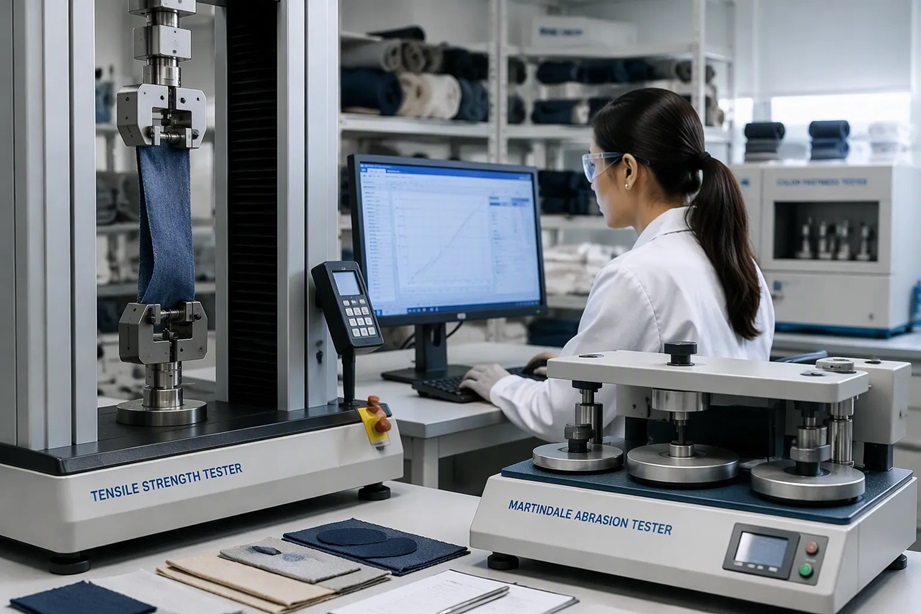
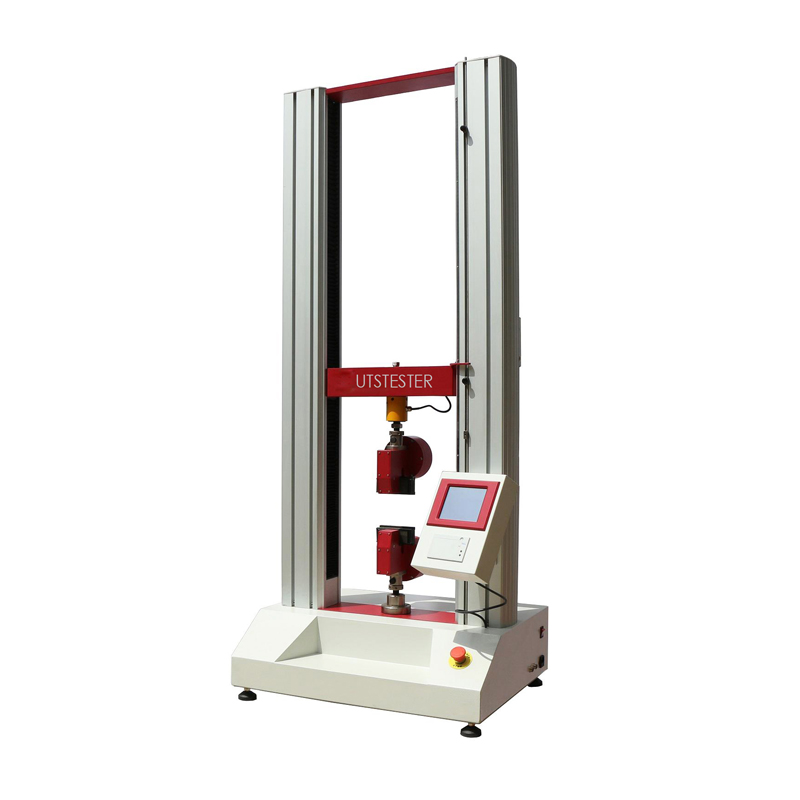
Los probadores de resistencia a la tracción son el pilar de la mayoría de los laboratorios de ensayos textiles. Una máquina de ensayos universales tira de una muestra de tejido hasta que se rompe. El instrumento registra la resistencia a la tracción y el alargamiento. Algunos modelos también realizan pruebas de rasgado, deslizamiento de costuras y estallido. Puede elegir un bastidor de doble columna para cargas de trabajo pesadas o una unidad de columna única para trabajos de precisión en textiles, calzado y cuero. El probador de resistencia a la tracción universal de columna única cubre propiedades de tracción, pelado, rasgado y deslizamiento de costuras, y cumple con las normas ISO 13934 y ASTM D5034.
Los microscopios y las balanzas respaldan este trabajo a menor escala. Se examina la estructura de la fibra con aumento y se pesan pequeñas muestras en una balanza de precisión. Estos instrumentos envían datos al mismo sistema de calidad que los probadores de resistencia. Juntos, convierten las observaciones preliminares en evidencia sólida.
Instrumentos de color, abrasión e inflamabilidad
Los probadores de solidez del color evalúan cómo resiste el tejido a la luz, el lavado y el frote. La máquina mide el cambio de color y el manchado, para que pueda evaluar la retención del color y la durabilidad frente a una norma. Las pruebas de abrasión y pilling se encuentran entre las verificaciones más frecuentes en cualquier laboratorio textil. Un probador de abrasión Martindale frota el tejido contra una superficie abrasiva para simular el desgaste por uso y luego cuantifica la resistencia a la abrasión.
Las cámaras de prueba de inflamabilidad exponen el tejido a una fuente de ignición controlada. Miden la propagación de la llama, la velocidad de combustión y el tiempo de persistencia de la llama. Estos resultados respaldan el cumplimiento de las normas de seguridad para prendas de vestir, tapicería y textiles de protección. Los instrumentos inteligentes ahora capturan lecturas de forma automática, lo que aumenta la eficiencia y reduce el error humano. Al seleccionar máquinas de ensayo textiles, adapte cada instrumento a la norma que exige su comprador. Un proveedor confiable de equipos de ensayo textiles le ayuda a crear ese conjunto sin vacíos.
Equipos de ensayo de fibras
Pruebas clave para fibras
Las pruebas de fibras comienzan antes de formar cualquier hilo. Se miden cuatro propiedades fundamentales: finura, longitud, resistencia y humedad. Cada una de ellas determina el comportamiento posterior del material.
|
Propiedad
|
A qué afecta
|
Ejemplo de puntuación alta
|
Ejemplo de puntuación baja
|
|
Longitud de la fibra
|
Resistencia, resistencia al pilling
|
Algodón de fibra larga
|
Algodón de fibra corta
|
|
Finura
|
Suavidad, confort al contacto con la piel
|
Lana merino fina
|
Lana gruesa
|
|
Recuperación de humedad
|
Transpirabilidad, confort
|
Algodón, lana
|
Acrílico, poliéster
|
La prueba de longitud utiliza instrumentos como el Fibrografe para determinar la longitud promedio de un lote. Las fibras más largas producen hilos más suaves y resistentes. La prueba de resistencia a la tracción estira las fibras individuales hasta que se rompen. La fuerza requerida revela la resistencia inherente de la fibra. La finura y la madurez también importan. El método del flujo de aire hace pasar aire a través de una masa fija de fibra y mide la caída de presión. Las fibras de algodón maduras se tiñen mejor y conservan una mayor resistencia. Para la humedad, el método de secado en estufa pesa la fibra, la seca y la vuelve a pesar. La diferencia de peso muestra el contenido de humedad. Una humedad constante favorece un procesamiento y teñido uniformes.
Aplicaciones en hilandería
Los equipos de hilandería utilizan los datos de las pruebas de fibra para ajustar la maquinaria. Las fibras resistentes permiten velocidades de hilado más altas manteniendo la calidad. Las fibras más débiles requieren velocidades reducidas para evitar roturas.
|
Parámetro de prueba de fibras
|
Aplicación en el proceso de hilado
|
|
Resistencia de la fibra
|
Velocidades más altas para fibras resistentes; velocidades reducidas para fibras débiles
|
|
Longitud y uniformidad de la fibra
|
Ajuste de los ajustes del equipo de cardado
|
|
Uniformidad
|
Una baja uniformidad señala una posible debilidad del hilo
|
|
Valores de Micronaire (ideal 3.5–4.9 para algodón upland)
|
Guiar los ajustes de la maquinaria, predecir el rendimiento, evaluar la madurez
|
Una baja uniformidad puede debilitar los hilos, lo que lleva a tejidos de menor calidad y resultados desiguales durante el hilado.
También utiliza estos resultados para optimizar los ajustes de la maquinaria, predecir el rendimiento del procesamiento, evaluar la madurez y garantizar la calidad del producto final. Los resultados de las pruebas de fibra establecen la base para cada etapa posterior. Contar con buenos datos aquí ahorra retrabajos en etapas posteriores.
Equipo de prueba de hilos
Resistencia y regularidad del hilo
El equipo de prueba de hilos mide cuatro propiedades críticas: título, regularidad, torsión y resistencia a la tracción. Cada propiedad afecta el rendimiento textil en etapas posteriores. La siguiente tabla muestra las herramientas estándar para cada prueba.
|
Prueba
|
Equipo clave
|
|
Título del hilo
|
Probador de título de hilo(devanadora y balanza)
|
|
Regularidad
|
Probador de regularidad de hilo
|
|
Torsión
|
Probador de torsión de hilo
|
|
Resistencia a la tracción
|
Probador de resistencia de hilo sencillo
|
Usted mide el título del hilo envolviendo una longitud conocida en una devanadora y pesándola. Esto le proporciona la densidad lineal y le indica si el hilo cumple con las especificaciones. La medición de la regularidad cuantifica la variación de masa a lo largo de la longitud del hilo. Una alta variación crea puntos gruesos y delgados que causan rayas en el tejido. La medición de la torsión utiliza el método de destorsión/retorsión para determinar las vueltas por metro. La torsión afecta la resistencia del hilo y el tacto del tejido. La medición de la resistencia a la tracción tira de un hilo sencillo hasta que se rompe. La fuerza requerida revela la carga de rotura. Los resultados precisos evitan retrabajos en etapas posteriores.
El gráfico anterior muestra cuántas opciones de equipo existen para cada categoría. Su laboratorio de pruebas de hilo debe incluir al menos un instrumento por categoría.
Aplicaciones en la preparación del tejido
Las pruebas de hilo se conectan directamente con la preparación del tejido. Los datos del título le ayudan a establecer la tensión de urdimbre correcta. Si el título varía, obtendrá una densidad de tejido desigual. Los datos de regularidad le permiten ajustar la velocidad de bobinado. Los hilos con baja regularidad requieren velocidades más lentas para evitar roturas. Los resultados de la torsión guían las decisiones de encolado. Los hilos de baja torsión necesitan más encolado para soportar las tensiones del telar.
Usted utiliza las mediciones de resistencia a la tracción para establecer los límites de parada de la máquina. Una sección de hilo débil activa una parada antes de que ocurra una rotura. Esto reduce el tiempo de inactividad y mejora la eficiencia. Para el tejido de punto, la regularidad y la resistencia son lo más importante. Las máquinas de tejer funcionan a altas velocidades. Un hilo con mala regularidad causa puntos caídos.
Los instrumentos inteligentes de prueba de hilo capturan las lecturas automáticamente. Usted obtiene resultados de prueba inmediatos sin registro manual. Esto acelera su proceso de control de calidad. Puede revisar varias bobinas por lote y tomar decisiones de aprobación o rechazo más rápidas. La evaluación consistente del hilo evita problemas más adelante en la producción. Estos equipos de prueba sirven para toda su operación textil. Para una prueba de hilo efectiva, revise múltiples bobinas por lote. Debe seleccionar instrumentos de prueba textil que coincidan con sus tipos de hilo específicos. Su rutina de prueba de hilo debe incluir una revisión rápida de cada bobina antes de tejer.
Equipo de prueba de tejidos
Pruebas físicas y mecánicas
Las pruebas de tejidos cubren las propiedades mecánicas fundamentales que determinan cómo se comporta un material en el uso real. Usted mide la resistencia a la tracción, la resistencia al desgarro, la resistencia al estallido, el deslizamiento de costura y la estabilidad dimensional. Cada prueba sigue un estándar reconocido, por lo que sus resultados tienen peso ante compradores y certificadores.
La siguiente tabla relaciona las pruebas de tejido comunes con sus métodos.
|
Categoría de prueba
|
Método
|
|
Tracción / Elongación
|
Tensión y elongación de tejidos elásticos(usando una máquina de prueba de tracción)
|
|
Resistencia al desgarro
|
Resistencia al desgarro de tejidos mediante el procedimiento de lengüeta (desgarro simple)
|
|
Resistencia al desgarro
|
Resistencia al desgarro de tejidos mediante el procedimiento trapezoidal
|
|
Resistencia al estallido
|
Método de prueba de resistencia al estallido del diafragma
|
|
Deslizamiento de costura
|
Resistencia al deslizamiento del hilo en la costura de tejidos de tapicería
|
|
Estabilidad dimensional
|
Estabilidad dimensional de los tejidos ante cambios de humedad y temperatura
|
Usted realiza pruebas de desgarro utilizando una máquina de ensayo de tracción, con el método de lengüeta para tejidos más ligeros y el procedimiento trapezoidal para tejidos más gruesos. La resistencia al estallido es lo más importante para los tejidos de punto, que se estiran en lugar de rasgarse. La prueba de deslizamiento de costura revela si los hilos se separan en la línea de costura. La estabilidad dimensional comprueba cómo afectan los cambios de humedad y temperatura al tamaño del tejido.
Pruebas de rendimiento y comodidad
La prueba de permeabilidad al aire mide la facilidad con la que el aire fluye a través de un tejido. Se sujeta una muestra, se aplica una presión de aire controlada y se registra el flujo de aire. El resultado se informa en unidades de flujo de aire por área. Normas como ASTM e ISO guían el procedimiento. La densidad del tejido, el grosor, el tipo de fibra y los acabados afectan la lectura.
La repelencia al agua y la permeabilidad a la humedad completan la evaluación de la comodidad. La transpirabilidad se refiere a la capacidad de un tejido para dejar pasar el vapor de humedad, medida normalmente como una tasa de transmisión de vapor de humedad. Normas como ISO y GB/T cubren estas comprobaciones. La ropa deportiva y los textiles para exteriores necesitan un equilibrio óptimo de transpirabilidad, tasa de transmisión de vapor de humedad y permeabilidad al aire. Estas pruebas le permiten respaldar las afirmaciones de comodidad. Los instrumentos de prueba textiles inteligentes capturan las lecturas automáticamente, lo que mejora la eficiencia y reduce el error manual. Un proveedor confiable de equipos de prueba textiles le ayuda a seleccionar el conjunto adecuado para sus necesidades de prueba de tejidos.
Pruebas de productos teñidos y acabados
Pruebas de solidez del color y químicas
La prueba de solidez del color revela si el tinte permanece donde debe. Usted realiza cuatro comprobaciones principales: lavado, frotamiento, luz y transpiración. Cada una sigue una norma reconocida, por lo que sus resultados tienen peso ante los compradores.
|
Prueba de solidez
|
Factor principalFactor
|
Equipo requerido
|
|
Lavado
|
Detergente y agitación
|
Probador de solidez al lavado
|
|
Frotamiento
|
Fricción (seco y húmedo)
|
Crockmeter
|
|
Luz
|
Exposición a rayos UV (lámpara de xenón)
|
Probador de solidez a la luz
|
|
Transpiración
|
Sudor humano
|
Placas de presión y horno
|
La prueba de lavado utiliza detergente de referencia para simular el lavado doméstico. Puede realizar un solo ciclo o hasta cinco ciclos con mayor acción mecánica. La prueba de frotamiento presiona un paño blanco estándar contra su muestra bajo condiciones controladas, tanto en seco como en húmedo. La prueba de luz expone las muestras a una lámpara de arco de xenón, y usted evalúa el cambio de color frente a referencias de lana azul. La prueba de transpiración trata las muestras en soluciones que contienen histidina, luego las coloca entre placas bajo presión. La mayoría de las marcas requieren una calificación mínima para la aprobación de la producción.
Las pruebas químicas completan esta etapa. Usted comprueba los niveles de pH, el contenido de formaldehído y las sustancias restringidas. Estas pruebas protegen a los consumidores y mantienen sus productos en cumplimiento con las regulaciones.
Pruebas de durabilidad del acabado
La durabilidad del acabado determina cómo sobrevive un tejido al uso en el mundo real. Usted mide el encogimiento, la resistencia al pilling, la recuperación del estiramiento y el tacto. La estabilidad dimensional comprueba si el tejido mantiene su tamaño después del lavado. La ropa general requiere un encogimiento dentro de límites aceptables. La resistencia al pilling califica la durabilidad de la superficie en una escala de calificación, y la mayoría de las marcas exigen una calificación alta.
La prueba de estiramiento y recuperación mide cuánto se estira el tejido y vuelve a su forma. La ropa general requiere un alto porcentaje de recuperación. La evaluación del tacto sigue siendo subjetiva. Usted pasa el tejido entre el pulgar y el índice y comprueba si la textura es consistente. Las zonas ásperas repentinas o los puntos resbaladizos indican un acabado desigual o residuos químicos.
Estas pruebas le permiten detectar problemas antes del corte en masa. Los instrumentos de prueba textiles confiables y un proveedor de equipos de prueba textiles de confianza le ayudan a construir un laboratorio de acabado completo. Sus resultados de prueba respaldan entonces cada afirmación de rendimiento que usted haga.
Pruebas de ropa y prendas de vestir
Pruebas de costura y construcción
La evaluación de la prenda va más allá de las propiedades del tejido por sí solas. Ahora usted evalúa cómo se mantienen unidos los componentes durante el uso real. La prueba de resistencia de la costura separa los paneles cosidos para medir la resistencia. Una máquina de ensayo universal con agarres especializados aplica fuerza hasta que la costura falla. El valor registrado le indica la carga máxima que puede soportar la costura. Las costuras débiles indican una tensión de hilo incorrecta, una densidad de puntada incorrecta o tipos de hilo incompatibles.
También comprueba el fruncido de la costura y la apariencia después del lavado. Una prueba estándar de fruncido de costura utiliza escalas de referencia fotográficas para calificar la planitud. Una apariencia de costura deficiente indica ajustes de máquina incorrectos o un tejido inestable. Las pruebas de tracción de botones aplican una fuerza especificada para garantizar que los botones permanezcan sujetos durante el uso normal. Las pruebas de cremallera comprueban el movimiento del cursor y el enclavamiento a través de ciclos repetidos. Estas comprobaciones de construcción detectan defectos que los consumidores notan de inmediato.
Estos equipos de prueba producen datos confiables cuando usted sigue métodos reconocidos. Puede detectar defectos antes de que comience la producción en masa. Las ejecuciones consistentes de estas comprobaciones mantienen el control de calidad.
Pruebas de rendimiento de uso final
Los minoristas y las marcas requieren evaluaciones de rendimiento de uso final antes de aprobar la producción. La siguiente tabla muestra las categorías de prueba comunes que los fabricantes deben realizar:
|
Prueba
|
Propósito
|
|
Estabilidad dimensional
|
Evalúa la estabilidad al lavado y a la limpieza en seco
|
|
Solidez del color
|
Evalúa la resistencia a la luz, al frote, al roce, al lavado y al blanqueo
|
|
Propiedades físicas
|
Cubre la resistencia, la abrasión y la resistencia al pilling
|
|
Inflamabilidad
|
Garantiza el cumplimiento de las normativas de inflamabilidad para prendas de vestir
|
|
Resistencia térmica y al vapor de agua
|
Mide la transferencia de calor y la transpirabilidad
|
|
Protección UV
|
Evalúa el rendimiento de la protección UV para la ropa
|
|
Etiquetado de cuidado
|
Determina las condiciones de cuidado para el consumidor, incluyendo el lavado y el secado
|
La estabilidad dimensional, la durabilidad y el rendimiento son áreas clave de uso final.
Necesita los instrumentos textiles adecuados para realizar estas evaluaciones. Un probador de solidez a la luz comprueba la retención del color bajo exposición UV. Un probador Martindale mide la resistencia a la abrasión y al pilling. Una cámara de inflamabilidad evalúa la propagación de la llama en ropa de dormir y prendas de protección. Un probador de repelencia al agua comprueba la resistencia a las salpicaduras en prendas de exterior. Cada instrumento debe coincidir con sus categorías de producto específicas. Cumplir con los requisitos del comprador mantiene sus productos en su lista de proveedores aprobados.
Los datos de estas evaluaciones se integran directamente en su sistema de control de calidad. Los resultados de evaluación consistentes le ayudan a mantener el estado de aprobación con los principales minoristas. Cuando trabaja con un proveedor de equipos de pruebas textiles, puede obtener instrumentos que se ajusten a sus necesidades en toda la cadena de suministro textil.
Tendencias en pruebas de textiles inteligentes
Las pruebas de textiles inteligentes son un área emergente que abarca los textiles electrónicos (e-textiles), sensores y tejidos conductores. Estos productos combinan la electrónica con el tejido, por lo que debe evaluar tanto el comportamiento eléctrico como el textil. Actualmente, ninguna organización supervisa este trabajo. Los textiles y la electrónica también siguen requisitos normativos separados, lo que crea brechas que debe gestionar.
Pruebas de e-textiles y sensores
Usted prueba materiales, componentes y dispositivos en diferentes niveles. Estos incluyen hilos conductores, resistencia eléctrica, sensores de deformación, lavabilidad de prendas y otras métricas de rendimiento. La lavabilidad sigue siendo el desafío más difícil. Los fabricantes buscan constantemente soluciones para mejorar la durabilidad y la lavabilidad, como recubrimientos protectores o encapsulación. Estos textiles deben ser lavables en casa, y los métodos de evaluación aún están evolucionando.
Normas y métodos emergentes
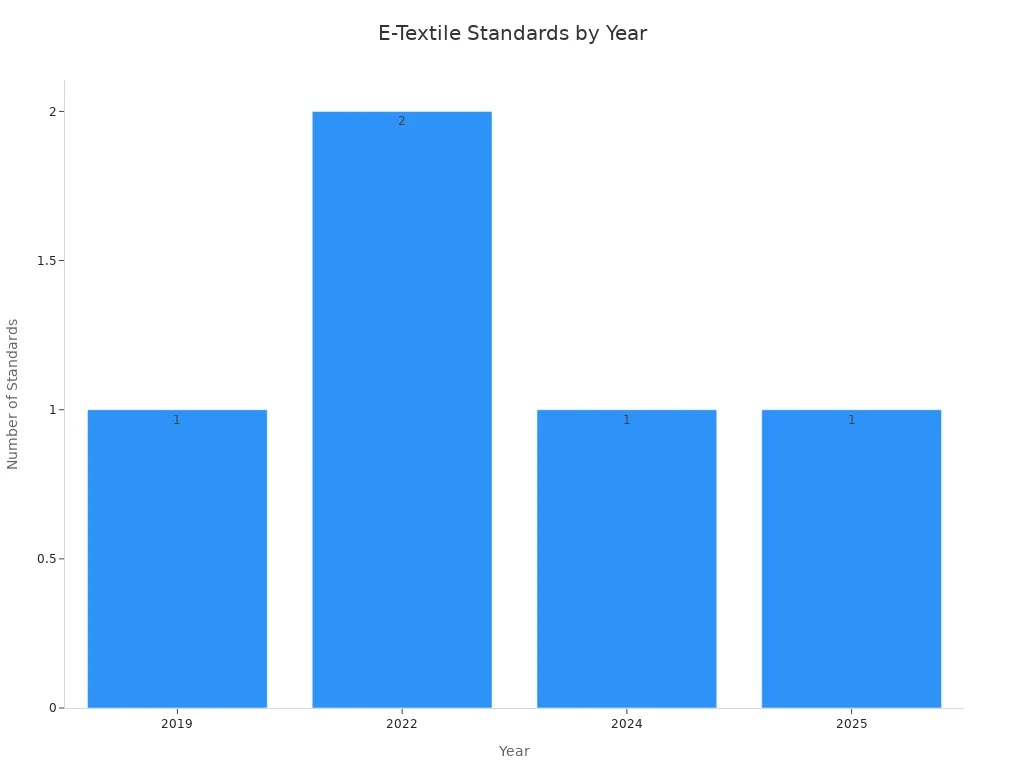
Varias normas guían ahora las pruebas de textiles inteligentes, cubriendo hilos conductores, electrónica impresa y pruebas eléctricas. Las organizaciones de normalización continúan desarrollando nuevos métodos para la calidad y fiabilidad de los e-textiles, incluidos los requisitos de lavabilidad. AATCC formó un comité para Textiles Electrónicamente Integrados y publicó un método para evaluar la resistencia eléctrica. El Comité de E-Textiles de IPC tiene múltiples grupos de trabajo dedicados a estas normas.
UTS International apoya estas necesidades cambiantes ayudándole a seleccionar instrumentos de pruebas textiles que coincidan con las nuevas normas. A medida que la tecnología de pruebas de textiles inteligentes madura, su laboratorio necesitará instrumentos que capturen datos en tiempo real y resultados de pruebas tanto en el rendimiento eléctrico como en el textil.
Desafíos de calidad comunes y pruebas
Encogimiento, pilling y sangrado de color
Usted se enfrenta a tres problemas persistentes en la producción textil: encogimiento, pilling y sangrado de color. Cada uno tiene un método de prueba dedicado. La siguiente tabla empareja cada desafío con las pruebas que debe realizar.
|
Desafío de calidad
|
Pruebas / Métodos
|
|
Encogimiento
|
Prueba de estabilidad dimensional
|
|
Pilling
|
Prueba de abrasión y pilling (p. ej., Martindale)
|
|
Sangrado de color
|
Pruebas de solidez al lavado y solidez al frote (usando crockmeter)
|
Puede prevenir estos problemas antes de la producción en masa. Pruebe las telas bajo diferentes condiciones de lavado para abordar el encogimiento. Realice pruebas de lavado para asegurar la estabilidad del tinte y reducir la pérdida de color. Realice pruebas de preproducción como parte de su garantía de calidad general de la prenda. Utilice telas preencogidas y tratamientos resistentes al encogimiento para reducirlo. Seleccione tintes resistentes al color y métodos de teñido adecuados para minimizar la pérdida de color. Elija fibras de alta calidad y fibra larga, así como acabados antipilling para reducir la formación de bolitas. Estos pasos protegen su reputación y reducen los costos de reprocesamiento.
Fallos de resistencia y dimensionales
Los fallos de resistencia ocurren cuando una tela no puede soportar el estrés durante el uso normal. Los fallos dimensionales incluyen encogimiento, crecimiento, torsión, sesgo y cambio de forma después del lavado, secado, vaporizado, planchado o uso. Necesita pruebas específicas para detectar ambos.
Para el fallo dimensional, realice pruebas de estabilidad dimensional. La tasa de cambio dimensional durante el lavado es un índice de calidad clave para las prendas. Los cambios inducidos por el lavado afectan directamente la forma y la estética de una prenda y, por lo tanto, su utilidad y capacidad de uso. Los compradores internacionales establecen requisitos para la estabilidad dimensional en el lavado. Su prueba debe comparar métodos para medir la tasa de cambio de dimensión de lavado en textiles, junto con los estándares de prueba asociados y las pruebas de muestra.
Para el fallo de resistencia, utilice pruebas de resistencia a la tracción, resistencia al desgarro, resistencia al estallido, resistencia de costura, deslizamiento de costura, tracción de botones, tracción de broches y resistencia de cremalleras. Estas pruebas le permiten identificar puntos débiles antes de la producción. Los instrumentos de prueba textil confiables y un proveedor de equipos de prueba textil confiable le ayudan a construir un laboratorio completo. Los resultados de sus pruebas respaldan cada reclamo de rendimiento que realice. Los datos consistentes de estas pruebas impulsan un mejor control sobre su línea de producción.
Configuración de un laboratorio de control de calidad
Un laboratorio nuevo falla por una razón común. Los equipos compran equipos antes de definir lo que necesitan probar. Debería invertir ese orden. Comience con los reclamos que exigen sus compradores y luego trabaje hacia atrás hasta las máquinas que producen la evidencia.
Niveles básico, avanzado y analítico
Puede construir su laboratorio en tres niveles. Cada nivel añade capacidad y costo. La tabla a continuación muestra lo que pertenece a cada uno.
|
Nivel
|
Equipo de ejemplo
|
Uso típico
|
|
Básico
|
Balanza de precisión, crockmeter, cabina de luz, medidor de espesor, medidor de pH
|
Controles de entrada rutinarios y decisiones simples de aprobado o fallido
|
|
Avanzado
|
Máquina de prueba universal, abrasión Martindale probador, probador de solidez al lavado, probador de resistencia al estallido
|
Pruebas físicas y de solidez del color completas para la aprobación de la producción
|
|
Analítico
|
Espectrofotómetro UV-Visible, probador de finura de fibra, analizador de humedad, campana de extracción
|
Análisis de causa raíz, identificación de fibras y cumplimiento químico
|
Comience en el nivel básico si tiene una operación pequeña. Agregue instrumentos avanzados cuando los compradores soliciten datos ASTM D5034 o ISO 13934. Pase a herramientas analíticas cuando necesite explicar por qué falló un lote, no solo que falló. Este enfoque escalonado protege su presupuesto y mantiene práctico su programa de control de calidad.
Planificación del flujo de trabajo y el espacio
Planifique su diseño en torno al flujo de muestras, no en torno al espacio de la pared. Una muestra debe moverse en una dirección: recepción, acondicionamiento, prueba y luego informe. El retroceso desperdicia tiempo y provoca confusiones.
Acondicione las muestras antes de probarlas. Los cambios de temperatura y humedad alteran los resultados, especialmente para las comprobaciones de estabilidad dimensional.
Agrupe los instrumentos por función. Mantenga la evaluación del color en una habitación con iluminación controlada, lejos de las ventanas. Coloque las máquinas de tracción y estallido en pisos estables para reducir la vibración. Reserve un área separada para el trabajo químico con la ventilación adecuada.
Su flujo de trabajo debe capturar datos en el punto de prueba. Los instrumentos digitales registran las lecturas automáticamente, lo que reduce los errores de entrada manual y mejora la eficiencia de las pruebas. Conecte cada máquina a un sistema para que sus resultados permanezcan rastreables.
La planificación del espacio también afecta a la dotación de personal. Un técnico puede realizar varias pruebas básicas a la vez. Las máquinas avanzadas necesitan operadores dedicados con capacitación. Planifique el espacio de banco para la preparación de muestras, el almacenamiento de estándares de referencia y un camino despejado para mover rollos y prendas.
Un laboratorio de pruebas textiles crece con el tiempo. Agregará instrumentos a medida que su gama de productos se expanda. Deje espacio para ese crecimiento ahora. UTS International ofrece consultoría de laboratorio para ayudarle a dimensionar cada nivel, diseñar su plano de planta y seleccionar equipos de prueba textil que coincidan con su alcance de prueba. Su orientación cubre todo, desde una configuración de banco único hasta una instalación analítica completa.
Cuando elija un proveedor de equipos de prueba textil, mire más allá del precio de compra. Pregunte sobre los programas de calibración, repuestos y capacitación de operadores. Estos factores dan forma a su eficiencia de prueba a largo plazo mucho más que la factura inicial. Un laboratorio bien planificado convierte los datos de prueba en decisiones que puede defender.
Elección de equipos de prueba textil
Alcance, flujo de trabajo y subcontratación
Comience con las pruebas que exigen sus compradores, no con un catálogo. Enumere los tipos de muestras que maneja a diario: fibras, hilos, telas tejidas o de punto y prendas terminadas. Luego, haga coincidir cada prueba con la capacidad de medición que requiere el método. La medición del color exige atención a la geometría del instrumento y a la presentación de la muestra. El análisis químico exige centrarse en el analito objetivo y la sensibilidad.
Separe las pruebas rutinarias de alta frecuencia de las ocasionales. Las mediciones rutinarias que afectan la producción pertenecen a la empresa. El análisis químico especializado o las pruebas de baja frecuencia pueden seguir subcontratándose hasta que el volumen justifique la inversión. Pregunte con qué frecuencia realizará cada prueba, qué tan rápido necesita los resultados y qué experiencia necesita el operador.
La planificación presupuestaria es igual de importante. Asigne presupuesto para infraestructura, equipos y software. Recuerde que el costo inicial de la máquina es solo una parte del costo total; el mantenimiento, la calibración y el tiempo de inactividad se suman significativamente. Un diseño lógico reduce el caminar del operador y los sistemas inteligentes reducen el costo por prueba.
Soporte, calibración y capacitación
El soporte a largo plazo decide si su laboratorio sigue siendo confiable. Elija marcas con representantes locales autorizados. Esto garantiza garantías genuinas, soporte técnico experto y repuestos fácilmente disponibles. Las marcas sin representación oficial crean problemas reales en el mantenimiento, la calibración y el reemplazo de piezas.
La calibración con materiales de referencia certificados mantiene precisas sus máquinas de prueba textil. El equipo que cumple con la norma ISO y tiene capacidad de calibración es fundamental para el éxito de la auditoría. Los costos de mantenimiento y calibración anuales deben estimarse con anticipación y, si exceden una parte significativa del costo original, el reemplazo puede volverse más rentable.
La capacitación merece la misma atención. La automatización avanzada reduce la dependencia del operador y reduce los costos de capacitación. También mejora la consistencia en todo su equipo. Cuando evalúe a un proveedor de equipos de prueba textil, confirme que la configuración propuesta se adapte a sus métodos reales. Los accesorios, las empuñaduras y los accesorios ambientales a menudo importan tanto como el instrumento base. Un socio confiable respalda sus soluciones de prueba textil durante años, no solo en la entrega.
Quién utiliza equipos de prueba textil
Fábricas, fabricantes y laboratorios
Las fábricas operan al inicio de la cadena. Usted realiza pruebas de calidad de fibra para evaluar las materias primas antes del hilado. El análisis de hilo sigue durante la producción. Las comprobaciones de tejido verifican las propiedades físicas antes del envío. Cada etapa produce datos que guían su próxima decisión. Una fábrica que omite la inspección de fibra entrante corre el riesgo de producir hilo débil que fallará más tarde en el tejido.
Los fabricantes se sitúan más adelante en la cadena. Usted examina los tejidos antes del corte para confirmar que cumplen con las especificaciones. Las pruebas de resistencia de costura y estabilidad dimensional detectan problemas antes de que se acumulen los costos de producción en masa. Los laboratorios independientes cumplen un propósito diferente. Usted los contrata cuando su configuración interna carece del equipo o la acreditación para procedimientos específicos. Estos laboratorios poseen acreditación NABL o certificación equivalente. Sus informes otorgan credibilidad a sus resultados de prueba a través de las fronteras. Usted confía en ellos para pasar inspecciones y respaldar la documentación de exportación. La industria textil depende de este enfoque estratificado de la calidad.
Minoristas y marcas
Los minoristas y las marcas aplican los datos de manera diferente. Usted no realiza los procedimientos por sí mismo. Usted especifica los requisitos y verifica el cumplimiento a través de un laboratorio de pruebas textiles de terceros. Por ejemplo, una marca de moda global que se abastece de proveedores indios utiliza muestreo aleatorio de lotes de cada proveedor. El laboratorio verifica la solidez del color, el encogimiento y los residuos químicos antes del envío internacional. Este enfoque redujo significativamente las devoluciones y las quejas de calidad de la marca. También fortaleció la confianza del consumidor a nivel mundial.
Un programa integral de pruebas de calidad cubre la resistencia a la tracción, la solidez del color, la estabilidad dimensional, la inflamabilidad, el valor de pH, los residuos químicos, la resistencia a la abrasión y la gestión de la humedad. Cada prueba confirma una propiedad específica. Los estándares reconocidos guían su trabajo de cumplimiento. Usted selecciona los procedimientos correctos para cada mercado y obtiene la certificación de terceros. Comprobar la presencia de productos químicos nocivos garantiza la seguridad para la ropa de bebé y los textiles médicos. Sin una verificación adecuada, usted corre el riesgo de que productos defectuosos lleguen a los consumidores. Los problemas de mala calidad, como la baja resistencia a la rotura o el pilling, erosionan la reputación de la marca. Las instalaciones de prueba insuficientes o la falta de profesionales capacitados conducen a resultados poco fiables. Usted necesita personal calificado que comprenda cómo operar el equipo e interpretar los datos correctamente. La información fiable del personal capacitado mantiene su programa de garantía de calidad efectivo.
El equipo de prueba textil cubre cada etapa, desde la fibra cruda hasta la prenda terminada. Cada instrumento responde a una pregunta de calidad específica. La configuración de su laboratorio debe coincidir con su alcance de prueba, presupuesto y objetivos a largo plazo, no solo con una lista de equipos. Trate la selección de equipos como una asociación continua. UTS International puede guiarlo a través de ese proceso con soporte y capacitación. Las reglas de sostenibilidad, un cumplimiento más estricto y las pruebas textiles inteligentes ahora remodelan lo que exigen los compradores. Usted necesita instrumentos que capturen resultados fiables y se adapten a medida que evolucionan los estándares. Un laboratorio inteligente convierte los datos en confianza, y esa confianza mantiene sus productos en movimiento.
Preguntas frecuentes
¿Qué instrumentos esenciales de prueba textil necesita para un laboratorio de inicio?
Comience con una balanza de precisión, un crockmeter, una cabina de luz y un medidor de espesor. Estos manejan las comprobaciones rutinarias de entrada. Agregue una máquina de prueba universal y un probador de abrasión Martindale a medida que se expande su alcance de prueba. Haga coincidir cada instrumento con los estándares que requieren sus compradores.
¿Con qué frecuencia debe calibrar sus máquinas de prueba textil?
Calibre el equipo compatible con ISO anualmente utilizando materiales de referencia certificados. Trabaje con su proveedor de equipos de prueba textil para programar visitas regulares de calibración y servicio.
¿Qué pruebas exigen más comúnmente los compradores de prendas de vestir?
Los compradores suelen exigir pruebas de estabilidad dimensional, solidez del color a la luz y al lavado, resistencia a la abrasión y al pilling, y resistencia de costura. Cada prueba sigue un estándar reconocido como ASTM o ISO. Verifique las especificaciones de su comprador antes de seleccionar instrumentos de prueba textil para su laboratorio.
¿Puede subcontratar las pruebas textiles en lugar de comprar equipos?
Sí. Reserve las pruebas internas para comprobaciones rutinarias de alta frecuencia que afecten las decisiones de producción. Subcontrate el análisis químico especializado o las pruebas de bajo volumen hasta que el volumen justifique la inversión. Los laboratorios independientes con acreditación NABL proporcionan informes creíbles para el cumplimiento de la exportación.
¿Cómo elige entre diferentes pruebas de desafío de calidad?
Mapee su defecto recurrente a su causa raíz. Para el encogimiento, realice pruebas de estabilidad dimensional. Para el pilling, utilice un probador Martindale o un probador de pilling por volteo. Para el sangrado de color, realice pruebas de solidez al lavado y al frote. Seleccione instrumentos de prueba textil que coincidan con el desafío que enfrenta con más frecuencia.


 +86 152 6060 5085
 English
 русский
 español
 português
 العربية
 Polski


 hello@utstesters.com
 hello@utstesters.com
 +86 152 6060 5085
 +8615260605085