You will encounter four major standards for flammability testing: ASTM D6413, ISO 15025, UL 94, and IEC 60695. Each document controls specific parameters including flame application time, specimen orientation, and acceptance criteria. Your automatic flammability tester must operate according to these requirements to produce valid, comparable results. Understanding each standard's scope and test method helps you select appropriate flammability test equipment for your needs. This knowledge ensures you configure your tester correctly for each procedure. UTS International designs automatic flammability testers that meet these international requirements, giving you a practical reference point for your testing operation. Selecting the correct standard protects your products and your market reputation.
Key Takeaways
-
Four main standards guide flammability testing: ASTM D6413, ISO 15025, UL 94, and IEC 60695.
-
Each standard specifies test methods, specimen dimensions, and pass/fail criteria for different materials.
-
Automatic flammability testers improve repeatability and accuracy, especially for IEC 60695 procedures.
-
Calibration of flame application time, flame height, and specimen orientation is critical for valid results.
-
Selecting the right tester for your target market ensures compliance and protects your product reputation.
ASTM D6413 and Textile Flammability Testing
Image Source: pexels
Scope and Test Method
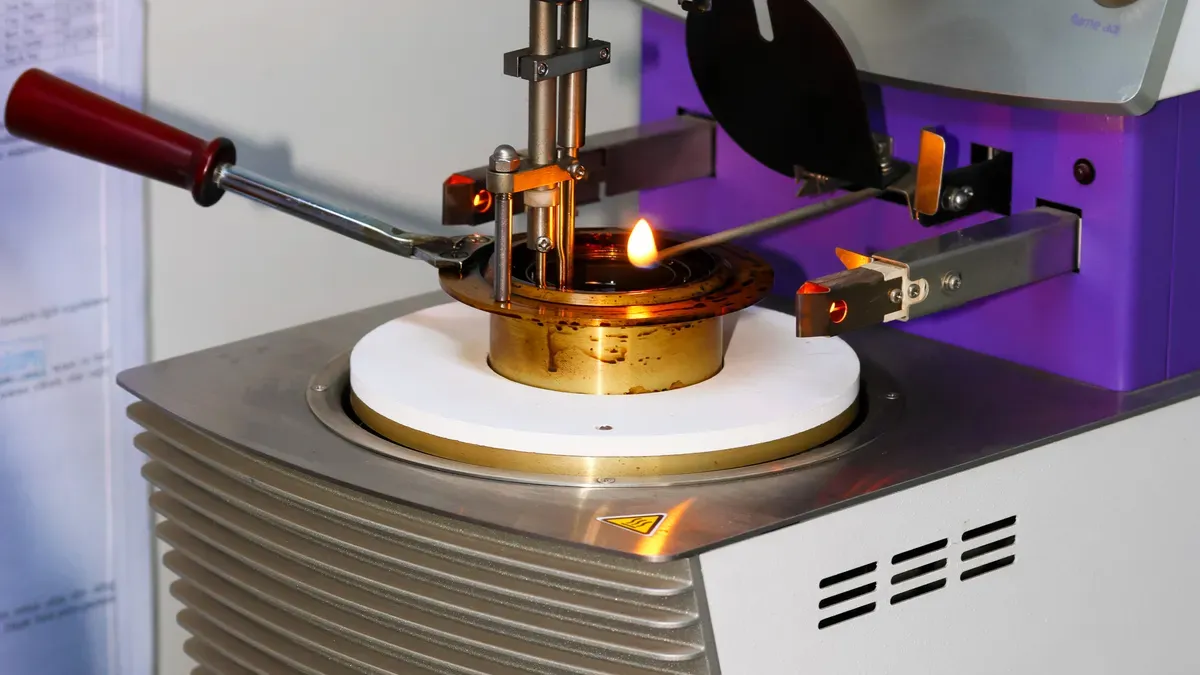
ASTM D6413 is a vertical flame test for textiles. You will find it widely used for flame-resistant clothing. The test measures how a fabric responds when you expose it to a controlled flame from below. This standard helps you determine whether a material self-extinguishes or continues to burn. Related textile standards include ASTM D1230 for clothing textiles and ASTM D618 Procedure B for conditioning. These documents work together to give you a complete picture of fabric performance.
You prepare each specimen at 75 mm × 300 mm as per ASTM D6413 requirements. This ensures consistency and comparability across tests. The evidence also lists 76 mm (3.0 in.) by 300 mm (12 in.) as the specimen dimensions. You need five lengthwise and five widthwise specimens. For woven fabrics, cut the long dimension parallel to warp yarns (lengthwise) and parallel to filling yarns (widthwise). Take lengthwise specimens from different positions across the fabric width. The long dimension is considered the direction of the test.
Tester Requirements and Acceptance Criteria
An automatic flammability tester controls flame application time and char length measurement. The vertical flammability chamber holds the specimen in place and applies the flame for a set duration. After the flame stops, you measure the char length to determine pass or fail. This test procedure requires precise timing and consistent flame height.
UTS International offers testers configured for ASTM D6413. You can rely on this flammability test equipment to meet the standard's demands. The right tester helps you produce valid results that other labs can compare. When you follow the standards correctly, you protect your product and your reputation.
ISO 15025 and Protective Clothing Standards
Test Procedures and Specimen Orientation
ISO 15025 covers limited flame spread for protective clothing. You use this standard to judge how a fabric behaves when a small flame touches its surface or its edge. Related protective clothing standards include ISO 6940 and ISO 6941. Those documents measure ignition and flame spread in different orientations, so they complement the data you collect here.
The standard defines two ignition modes. Surface ignition applies the flame to the center of the fabric. Edge ignition applies the flame to the bottom edge. An automatic flammability tester handles both modes by repositioning the burner and holding the specimen at the correct angle. Flame application time stays fixed for each mode:
One can easily confuse ISO 15025 and EN 11612. But technically, ISO 15025 is one of the test methods contained in the EN 11612 standards and determines the flame spread properties of the FR protective clothing. ... However, this can’t be claimed to be certified in EN 11612.
Acceptance Criteria and Tester Requirements
After the flame stops, you record two values. Both must stay within the limits below for the material to pass.
|
Parameter
|
Acceptable Time
|
|
Afterglow time
|
≤ 2 seconds
|
|
Afterflame time
|
≤ 2 seconds
|
A vertical flammability chamber keeps airflow and burner position consistent, which matters because small changes in distance or timing shift your results. UTS International testers can be configured for ISO 15025 procedures, so you can run surface and edge ignition on one machine. That flexibility supports flammability testing across several product lines without buying separate units. When you match your flammability test equipment to the correct standard, your test procedure stays repeatable and your reports hold up to review.
UL 94 Flammability Test for Plastics
Image Source: pexels
Horizontal and Vertical Burning Tests
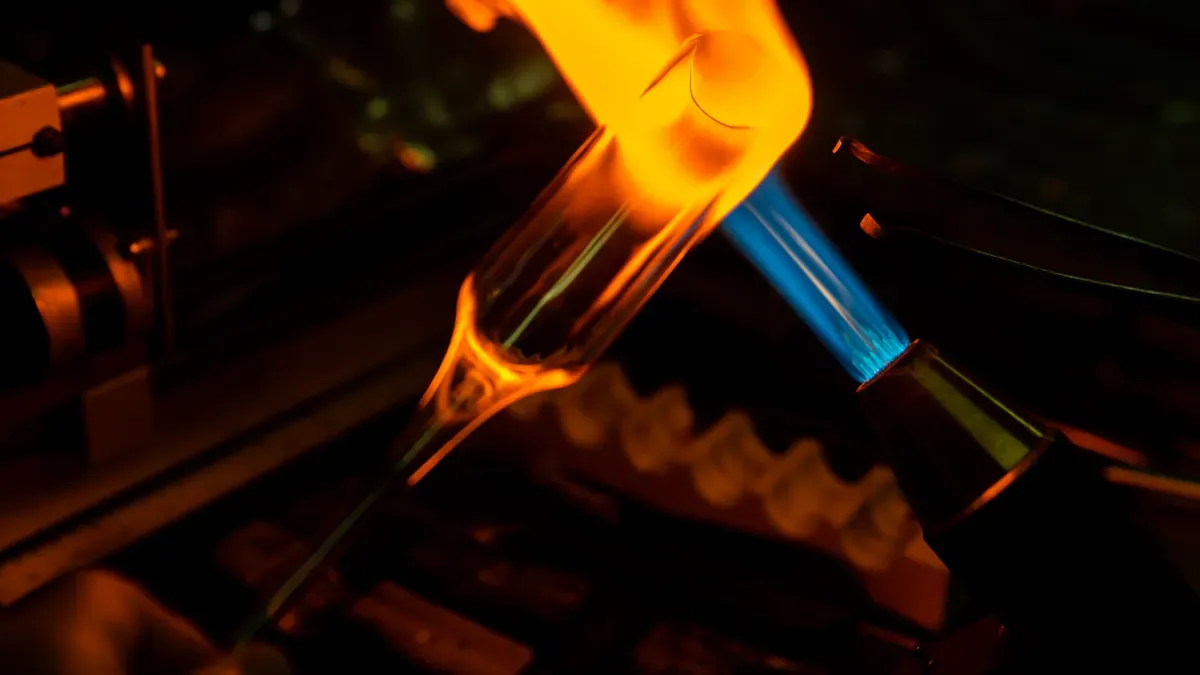
The UL 94 flammability test is a small-scale material test for plastics and electrical equipment. You use it to judge how a plastic sample responds to a small open flame. Related ASTM methods include ASTM D635, ASTM D3801, ASTM D4804, and ASTM D5025. These documents cover similar burning behavior for different material forms.
The UL 94 flammability test defines two main orientations. The horizontal and vertical flame tests differ in how you mount the specimen and how the flame reaches it. In the horizontal mode, you apply a 20 mm high Tirill burner flame to the free end of the specimen for 30 seconds, then remove it. The sample burns slowly across its length. In the vertical mode, you mount the specimen upright and apply the flame twice. The UL 94 flammability test then records afterflame time, afterglow, and whether drips ignite a cotton indicator placed below.
Specimen dimensions stay consistent across variants. Both horizontal and vertical tests use ½" x 5" bars. Very thin films under 0.25 mm use the 94VTM variant at 8" x 2". An automatic flammability tester holds these dimensions and flame positions steady, which matters because small shifts change your rating.
Pass/Fail Thresholds and Calibration
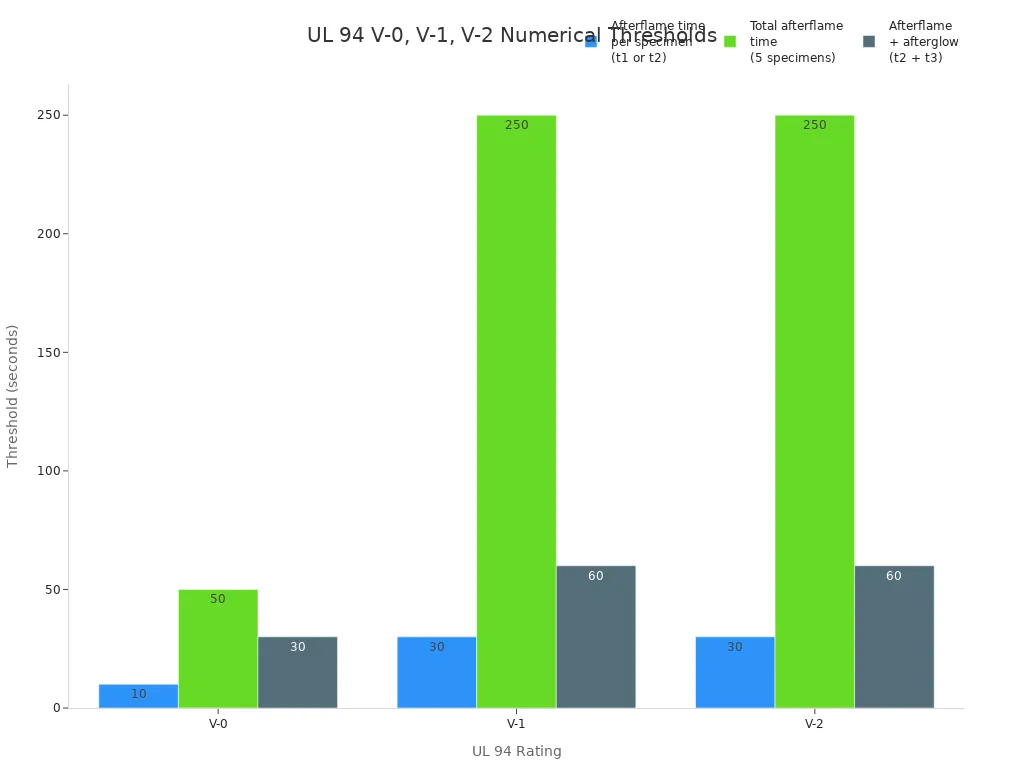
The UL 94 flammability test assigns ratings based on measured burn behavior. HB applies to horizontal samples that burn slowly. V-0, V-1, and V-2 apply to vertical samples, with V-0 as the strictest. The 50w/500w horizontal/vertical flame methods describe the burner energy used across these procedures.
|
Criterion (vertical test)
|
V-0
|
V-1
|
V-2
|
|
Afterflame time per specimen
|
≤ 10 s
|
≤ 30 s
|
≤ 30 s
|
|
Total afterflame time, five specimens
|
≤ 50 s
|
≤ 250 s
|
≤ 250 s
|
|
Afterflame plus afterglow after 2nd application
|
≤ 30 s
|
≤ 60 s
|
≤ 60 s
|
|
Flaming drips igniting cotton
|
No
|
No
|
Yes (allowed)
|
V-0 is the strictest vertical rating and is required for most consumer electronics enclosures, power supplies, and industrial control equipment near wiring. FR ABS and FR PC/ABS blends are common choices for enclosures, offering V-0 at thin walls around 1.5–1.6 mm. The UL 94 flammability test also covers 5VA and 5VB, the most stringent ratings, where 5VA materials do not burn with a flame after five applications of five seconds each.
Calibration keeps your results valid. You must verify flame height, flame application time, and burner angle before each run. A vertical flammability chamber controls airflow so the flame behaves the same way every time. UTS International automatic flammability testers support UL 94 procedures, and matching your flammability test equipment to the correct standard keeps your ratings comparable across labs.
IEC 60695 Flammability Testing Guide
The IEC 60695 series covers fire hazard testing for electrotechnical products. You use iec 60695 to evaluate how components resist ignition from thermal stress. This iec 60695 flammability testing guide explains two main methods: the glow-wire test and the needle flame method. Both simulate real-world risks from faulty wiring and components.
Glow-Wire and Needle-Flame Methods
The glow-wire method simulates thermal stress from an overheated component. A glow wire tester applies a heated element to your specimen at a controlled temperature. For finished products, iec 60695-2-11 defines the glow-wire end-product test. Your specimen must withstand a glow-wire heated to 850°C without producing a flame lasting longer than two seconds. The same test also applies at 750°C.
You measure the glow-wire ignition temperature, known as GWIT, to determine the resistance threshold. The difference between GWFI and GWIT matters for your protocol. GWFI indicates the glow-wire flammability index at a fixed temperature. GWFI and GWIT together give you complete material characterization for electrotechnical enclosures.
The needle flame test method simulates small flame ignition from a faulty component. A needle flame tester applies a small flame to your specimen for a set duration. According to iec 60695-2-10, the needle flame test requires the flame to extinguish within 30 seconds. Your specimen must not ignite the cotton indicator below. The needle flame test method helps you evaluate whether a product contains flame spread effectively. You can refer to iec 60695-2-10 for complete parameters. This needle flame test is crucial for tight enclosures where small flame ignition can propagate quickly.
|
Outcome
|
Criteria
|
|
Pass
|
Flame extinguishes within 30 seconds; no ignition of the cotton indicator
|
|
Fail
|
Sustained combustion, excessive dripping, or flame spread beyond limits
|
How Automatic Testers Support IEC Compliance
An automatic flammability tester improves repeatability significantly for iec 60695 procedures. Manual stopwatch timing produces a difference of 2.1 seconds in temperature data. An automatic tester stays within 0.2 seconds. That represents more than 90% improvement in repeatability. You get consistent results, which matters for CE marking certification.
The LISUN ZRS-3H's compliance with over 10 international standards (IEC 60695 series, UL 746A, DIN 695) makes it suitable for global certification workflows. … the ZRS-3H holds CE certification. … Its compatibility with multiple standards allows manufacturers to test for global markets (e.g., EU, China, North America) using a single platform. For example, compliance with iec 60695-2-11 (finished products) can be verified by testing assembled components directly in the ZRS-3H.
UTS International designs automatic flammability testers to meet the iec 60695 series. You can configure your glow wire tester or needle flame tester for your specific method. Your glow wire tester and needle flame tester must meet the calibration requirements of this standard. You can evaluate glow-wire resistance data from multiple production batches. This iec 60695 flammability testing guide helps you match equipment to standards. The right tester supports small flame ignition evaluation. Perform the glow-wire test and the needle flame test on one platform. This flexibility helps you achieve global certifications without repeating tests across different equipment.
Calibration, Pass/Fail Criteria, and Regulatory Standards
Key Calibration Parameters Across Standards
Calibration keeps your results valid across every test method. You must verify three core parameters before each run: flame application time, flame height, and specimen orientation. Flame application time varies by standard. ASTM D6413 and ISO 15025 both use a 10-second application for their procedures. UL 94 horizontal tests apply flame for 30 seconds. Your automatic flammability tester must hold these durations within tolerance.
Flame height also changes with the method. UL 94 uses a 20 mm flame from a Tirill burner. The burner sits 10 mm from the specimen. IEC 60695 needle-flame tests use a different flame geometry. Your vertical flammability chamber controls airflow so the flame behaves the same way every time. Specimen orientation matters too. You mount textiles vertically for ASTM D6413, plastics horizontally or vertically for UL 94, and protective clothing at fixed angles for ISO 15025.
A digital timer with 0.1-second resolution helps you meet these demands. The automatic flame-stop mechanism maintains flame level and ensures safe test conduct. Automated timer initiation via limit switches supports vertical tests. These features reduce operator error and improve repeatability.
Matching an Automatic Flammability Tester to Your Standard
Regulatory standards shape which tests you must run. In North America, you will encounter several key rules:
The Standard for the Flammability of Mattresses and Mattress Pads (Standard), 16 CFR part 1632, issued pursuant to the Flammable Fabrics Act (FFA), 15 U.S.C. 1191 et seq., sets forth a test to determine the ignition resistance of a mattress or mattress pad when exposed to a lighted cigarette.
Other rules include 16 CFR Part 1633 for mattress sets, California TB 117 for upholstered furniture, and 16 CFR § 1611.4 for vinyl plastic film. ASTM E681 and ASTM E918 cover chemical and flammability characteristics for gases and liquids. These documents define pass/fail limits you must meet.
|
Category
|
Regulatory Standard
|
Description
|
|
Consumer Goods
|
16 CFR Parts 1610, 1615, 1616, 1632, 1633
|
U.S. CPSC flammability standards
|
|
Consumer Goods
|
CA TB 117, TB 129, TB 133
|
California Technical Bulletins
|
|
Consumer Goods
|
UL 94
|
Polymeric materials and components
|
Choosing the right flammability test equipment starts with your target market. You need compliance with standards for each region you serve. Look for an automatic flammability tester that supports dual-mode horizontal and vertical testing. A complete set of specimen holders ensures a strong, secure grip. Safety interlocks, including door interlocks and emergency stop buttons, protect your operators. Data recording and reporting features help you maintain compliance verification records. UTS International offers testers configured for ASTM D6413, ISO 15025, UL 94, and IEC 60695 procedures. The right unit supports fire safety standards across multiple product lines.
You now know the four major standards. ASTM D6413 controls vertical textile tests with a 10-second flame. ISO 15025 governs surface and edge ignition for protective clothing. UL 94 sets horizontal and vertical burn ratings for plastics. IEC 60695 covers glow-wire and needle-flame methods for electrotechnical products. Each iec 60695 procedure demands precise flame control. Your automatic flammability tester must meet iec 60695 requirements. The vertical flammability chamber keeps airflow steady during every iec 60695 run. Calibrate your flammability test equipment before each iec 60695 test. Proper calibration ensures valid, repeatable iec 60695 results. The fire testing market grows at 5.03% CAGR through 2035, so demand for reliable flammability testing rises. Choose a tester aligned with your standards, such as those from UTS International, to avoid costly non-compliance.
FAQ
What is the difference between GWFI and GWIT in iec 60695 testing?
GWFI indicates glow-wire flammability index at a fixed temperature. GWIT measures glow-wire ignition temperature threshold. Both come from iec 60695 protocols. Together they characterize material resistance for electrotechnical enclosures.
Which UL 94 rating do consumer electronics enclosures require?
V-0 is the strictest vertical rating. Most consumer electronics enclosures require V-0. Power supplies and industrial control equipment near wiring also need it. FR ABS and FR PC/ABS blends achieve this at 1.5–1.6 mm walls.
How does an automatic flammability tester improve iec 60695 repeatability?
Manual stopwatch timing creates a 2.1-second difference. An automatic flammability tester stays within 0.2 seconds. This improves repeatability by over 90%. Your vertical flammability chamber keeps airflow steady during iec 60695 tests.
What calibration parameters matter for iec 60695 testing?
You verify flame application time, flame height, and specimen orientation. These parameters vary across standards including iec 60695. Your flammability test equipment must hold each value within tolerance for valid results.
Can one automatic tester handle multiple iec 60695 procedures?
Yes. Configure your automatic flammability tester for glow-wire or needle-flame methods. UTS International designs testers meeting the iec 60695 series. One platform supports multiple procedures from this standard.


 +86 152 6060 5085
 English
 русский
 español
 português
 العربية
 Polski



 hello@utstesters.com
 hello@utstesters.com
 +86 152 6060 5085
 +8615260605085