I. ¿Qué es el ensayo de abrasión Wyzenbeek?
El ensayo de abrasión WyzenbeekEl ensayo de abrasión Wyzenbeek, también conocido como el método de cilindro oscilante, es uno de los métodos más utilizados para probar la resistencia a la abrasión de los tejidos en Norteamérica. Nombrado en honor a su inventor, Wyzenbeek, este ensayo evalúa la durabilidad de un tejido bajo fricción repetida al simular el movimiento de frotamiento repetitivo de una persona sobre un asiento.
Los resultados de la prueba se expresan en “Double Rubs”, que representan el número de ciclos de fricción de ida y vuelta que un tejido puede soportar antes de mostrar un desgaste significativo. Esta métrica sirve como referencia principal para la selección de materiales en industrias como la del mobiliario, interiores de automóviles y asientos de aeronaves.
II. Principios del ensayo y mecanismos principales
2.1 Principios básicos
El principio básico del ensayo Wyzenbeek es fijar firmemente una muestra de tejido bajo condiciones controladas y someterla a fricción reciprocante contra un abrasivo estándar (normalmente lona de algodón o malla metálica) sobre una superficie curva.
En concreto:
- La muestra se monta en el dispositivo del equipo, con la tensión y presión especificadas aplicadas
- El abrasivo se monta en la superficie curva de un tambor oscilante y se mueve de ida y vuelta a una velocidad de aproximadamente 90 ciclos por minuto
- Cada ciclo completo de “ida + vuelta” cuenta como un Double Rub
- El ensayo continúa hasta que la muestra presenta un grado de desgaste especificado
2.2 Determinación de la finalización del ensayo
Según ASTM D4157, el ensayo se da por terminado cuando ocurre una de las siguientes tres condiciones:
Rotura de dos o más hilos: dos o más hilos se rompen en la superficie de la muestra
Desgaste significativo: aparece desgaste visible, formación de bolitas o adelgazamiento del material
Se alcanzan 100,000 Double Rubs: este es el límite superior; superar este valor generalmente no indica una mejora en la vida útil real
> Nota: La muestra debe inspeccionarse cada 5,000 ciclos. Si se detecta una falla en un punto de inspección determinado, el resultado del punto de inspección anterior de 5,000 ciclos debe registrarse como resultado final. Por lo tanto, los resultados Wyzenbeek generalmente se informan en incrementos de 5,000 ciclos.
III. Normas aplicables
El Wyzenbeek Abrasion Tester cumple con las siguientes normas:
- ASTM D4157 — Método de ensayo estándar para la resistencia a la abrasión de tejidos textiles (método pendular)
- ASTM D3597 — Método de ensayo estándar para la evaluación de propiedades físicas de tejidos textiles
- ISO 12402-7 — Método de ensayo de resistencia a la abrasión de dispositivos personales de flotación
- FTMS 191A 5304 — Método de ensayo federal
IV. Características del Wyzenbeek Abrasion Tester
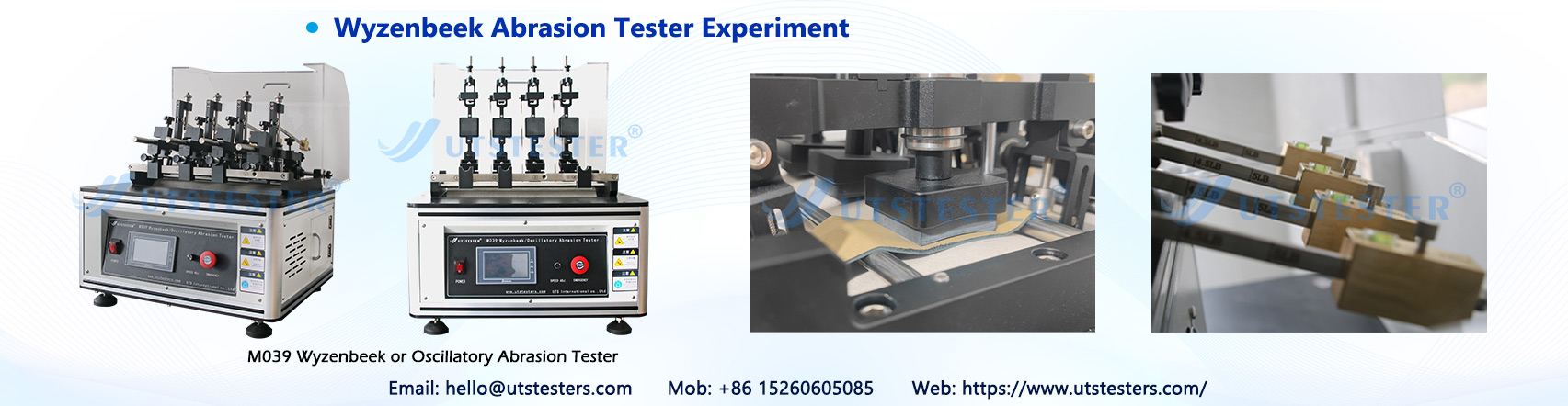
- Construcción de acero inoxidable y aleación de aluminio: garantiza la durabilidad a largo plazo de los componentes mecánicos
- Sistema de motor sin escobillas: funcionamiento suave y bajo nivel de ruido
- Mecanismo de transmisión sellado: diseño a prueba de polvo para facilitar el mantenimiento
- Puerto de vacío: elimina en tiempo real los residuos de fibras generados por la fricción para evitar interferencias en los resultados del ensayo
V. Procedimiento experimental detallado
1. Preparación de la muestra - Corte muestras tanto en la dirección de la urdimbre como de la trama del tejido a ensayar
2. Instalación del abrasivo - Fije de forma segura lona de algodón estándar n.º 10 (o malla metálica, para fibras de olefina y de bajo punto de fusión) en la superficie curva del tambor oscilante
3. Instalación de la muestra de ensayo - Sujete ambos extremos de la muestra en los dispositivos de prueba. Ajuste la tensión y los pesos de presión para asegurar que la superficie de la muestra esté plana, tensa y sin holgura ni deformaciones
4. Configurar parámetros del ensayo — Establezca el número objetivo de ciclos de fricción en el panel de control y confirme la velocidad de oscilación
5. Realizar el ensayo — Inicie el equipo para comenzar la fricción de ida y vuelta
6. Determinar el punto final y registrar resultados — Cuando dos hilos se rompan o presenten desgaste significativo, registre el recuento actual de ciclos y calcule el promedio de ciclos de fricción dobles para las muestras de urdimbre y trama
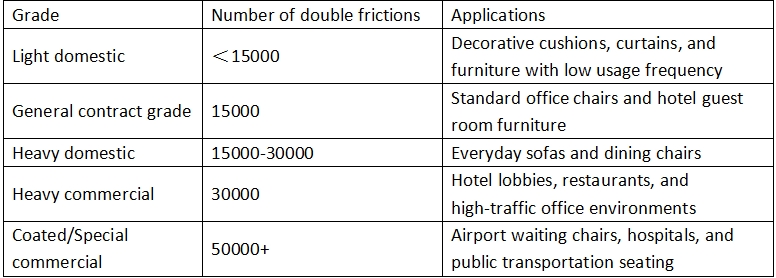
VI. Clasificación de resultados y directrices de aplicación
VII. Preguntas frecuentes y precauciones
P1: ¿Por qué los resultados del ensayo se reportan en incrementos de 5,000 ciclos?
R: Porque la norma especifica que la muestra debe inspeccionarse cada 5,000 ciclos. Si la muestra falla a los 35,200 ciclos, el resultado debe registrarse como 35,000 ciclos para garantizar la consistencia y repetibilidad del ensayo.
P2: ¿Cuál es la diferencia entre abrasivos de malla metálica y lona de algodón?
R: La lona de algodón es el abrasivo estándar y es adecuada para la mayoría de los tejidos. La malla metálica se recomienda específicamente para fibras de olefina y de bajo punto de fusión, ya que estos materiales pueden fundirse y adherirse al frotarse contra la lona de algodón.
P3: ¿El equipo de ensayo requiere calibración periódica?
R: Sí. Se recomienda una calibración completa una vez al año.
P4: ¿Cómo se puede mejorar la eficiencia de las pruebas?
R: Elegir un dispositivo de 4 estaciones permite realizar pruebas simultáneas de urdimbre, trama y muestras bajo diferentes condiciones, aumentando significativamente el rendimiento de las pruebas. Los modelos equipados con función de apagado automático pueden completar las pruebas sin supervisión.
Correo electrónico: hello@utstesters.com
Directo: +86 152 6060 5085
Teléfono: +86-596-7686689
Sitio web: www.utstesters.com


 +86 152 6060 5085
 English
 русский
 español
 português
 العربية
 Polski


 hello@utstesters.com
 hello@utstesters.com
 +86 152 6060 5085
 +8615260605085