A lo largo del crecimiento de un niño, los peluches se convierten en compañeros inseparables, mientras que los pijamas infantiles sirven como prendas íntimas para un sueño tranquilo. Al elegir estos artículos, los padres suelen priorizar la suavidad y los diseños adorables, pero pasan por alto un riesgo oculto y mortal que se esconde tras su apariencia "suave": la inflamabilidad. Como empresa dedicada al desarrollo y mantenimiento de instrumentos de prueba textil, creemos firmemente que las pruebas de inflamabilidad no son un requisito innecesario de la industria, sino una medida esencial para la seguridad infantil.
I. La vulnerabilidad única de los niños a los riesgos de inflamabilidad
Los niños, especialmente los bebés y los niños pequeños de 3 a 12 años, poseen características fisiológicas y hábitos de comportamiento que los dejan prácticamente indefensos ante los productos inflamables. Esta es una de las principales razones por las que las pruebas de inflamabilidad obligatorias son esenciales para los productos relacionados.
En cuanto al comportamiento, los niños muestran una gran curiosidad, a menudo manipulando objetos o tocando llamas abiertas (p. ej., encendedores, velas, estufas de gas). También pueden, sin darse cuenta, acercar juguetes de peluche o pijamas a aparatos de calefacción (p. ej., radiadores, mantas eléctricas) durante el juego. El contacto con cualquier fuente de ignición puede provocar fácilmente la combustión. Además, la lentitud de movimientos de los niños y su menor capacidad de respuesta ante emergencias les impiden escapar rápidamente del peligro durante un incendio. Al carecer de autocontrol, incluso una breve exposición a las llamas puede causar quemaduras graves.
Físicamente, los niños tienen la piel delicada con un estrato córneo delgado. Las quemaduras no solo causan un dolor más intenso, sino que también aumentan la susceptibilidad a complicaciones como infecciones y cicatrices hipertróficas. En casos graves, las quemaduras pueden ser mortales. Además, los bebés suelen morder peluches o dormir con ellos, mientras que los pijamas infantiles se usan cerca de la piel. Una vez encendidas, las llamas alcanzan rápidamente la piel, causando lesiones mucho más graves que cuando se quema la ropa de adultos. Esta vulnerabilidad inherente exige estándares de seguridad significativamente más altos para los productos infantiles en comparación con los artículos para adultos, siendo primordiales las pruebas de inflamabilidad.
II. Peligros de inflamabilidad en juguetes de peluche y ropa de dormir infantil: Características del material
Tanto los peluches como la ropa de dormir infantil conllevan riesgos inherentes de inflamabilidad debido a las propiedades de sus materiales. Sin pruebas y controles profesionales, estos peligros pueden surgir en cualquier momento.
(1) Juguetes de peluche: riesgos de doble inflamabilidad del relleno y la tela
Los juguetes de peluche constan de dos componentes principales: tela exterior y relleno interior, ambos generalmente hechos de materiales inflamables o combustibles. Las telas exteriores más comunes incluyen felpa de poliéster, felpa acrílica, felpa de algodón y tela de lana. Las telas de fibras naturales, como la felpa de algodón y la lana, arden rápidamente, propagan las llamas con rapidez y producen humo denso y gases tóxicos durante la combustión. Las telas sintéticas, como el poliéster y el pelo acrílico, se derriten y gotean al arder. Estas gotas calientes fundidas pueden quemar directamente la piel de los niños, liberando gases tóxicos penetrantes que agravan las lesiones.
Los rellenos internos presentan importantes peligros ocultos. Para garantizar su suavidad y esponjosidad, los fabricantes suelen utilizar materiales como algodón PP, algodón perlado y espuma triturada. Estos rellenos son sueltos y muy transpirables. Al exponerse al fuego, arden rápidamente y las llamas pueden propagarse discretamente dentro del relleno, lo que dificulta su detección inmediata.
(2) La ropa de dormir de los niños es ajustada pero holgada, lo que acelera la propagación del fuego.
Si bien prioriza la suavidad, la transpirabilidad y la suavidad con la piel, la ropa de dormir infantil utiliza principalmente algodón, mezclas de algodón, seda y fibras sintéticas. Las fibras naturales como el algodón y la seda son inflamables, mientras que los materiales sintéticos son combustibles y producen gotas fundentes al arder. En comparación con la ropa de dormir para adultos, los pijamas infantiles están diseñados para ser más holgados, lo que facilita su colocación y movimiento. Este ajuste holgado aumenta la superficie de la prenda expuesta al aire. Una vez encendidas, las llamas pueden propagarse rápidamente, envolviendo instantáneamente el cuerpo del niño.
Aún más crítico, los pijamas infantiles se usan pegados a la piel. Una vez encendidos, las llamas queman directamente la piel, mientras que el calor y los gases tóxicos producidos por la combustión no se disipan rápidamente. Esto puede provocar quemaduras graves o intoxicación en poco tiempo. Además, los niños quedan inconscientes mientras duermen. Si los pijamas entran en contacto accidentalmente con fuentes de fuego, como lámparas de noche o mantas eléctricas, no pueden reaccionar a tiempo, lo que aumenta la probabilidad de incendios graves.
III. Pruebas de inflamabilidad: el «pasaporte» para entrar al mercado
Para proteger la seguridad infantil, países de todo el mundo han promulgado regulaciones estrictas que exigen que los juguetes de peluche y la ropa de dormir infantil pasen pruebas de inflamabilidad antes de su producción, venta o importación. Esto constituye una obligación legal para las empresas y es crucial para mitigar los riesgos del mercado.
(1) Reglamento interno
La norma nacional china “Especificaciones Técnicas de Seguridad para Productos Textiles para Bebés y Niños” (GB 31701-2015) clasifica los productos textiles infantiles en las clases A, B y C. La ropa infantil (de 0 a 36 meses) debe cumplir con las normas de la clase A. Las telas y los rellenos para pijamas y peluches infantiles deben superar pruebas de inflamabilidad. Se estipulan límites específicos de rendimiento de combustión, que prohíben los materiales que se queman demasiado rápido o emiten gases tóxicos durante la combustión. Las pruebas de rendimiento de combustión deben cumplir con la norma GB/T 14644.
(2) Reglamentos internacionales
Estados Unidos: La Ley de Mejora de la Seguridad de los Productos de Consumo (CPSIA) exige las pruebas de inflamabilidad como requisito fundamental. Todas las telas utilizadas en prendas de vestir deben cumplir con los requisitos de velocidad de combustión del Reglamento Federal de EE. UU. 16 CFR 1610, alcanzando las clasificaciones de Clase 1 (inflamabilidad normal) o Clase 2 (inflamabilidad media). La ropa de dormir infantil debe cumplir con las normas específicas de rendimiento de combustión según la talla: 16 CFR 1615 (tallas 0-6X) o 16 CFR 1616 (tallas 7-14). Las etiquetas de los productos deben indicar claramente la palabra "ignífugo" o información relacionada. En 2021, la marca La Paloma fue objeto de un retiro del mercado por ropa de dormir infantil que infringía esta norma federal sobre ignifugación para prevenir la propagación del riesgo de quemaduras.
UE: Los juguetes de peluche deben cumplir con la norma de seguridad para juguetes EN 71-2 (versión revisada EN71-2:2020+A1-2025, publicada en 2025), que exige explícitamente que los materiales de los juguetes sean difíciles de encender o de combustión lenta. Se aplican requisitos específicos de velocidad de combustión a los materiales de relleno y tejidos utilizados en los juguetes de peluche. La ropa de dormir infantil debe cumplir con la norma EN 14878, que exige resistencia al fuego después de 50 lavados y utiliza pruebas de combustión vertical para controlar la propagación de la llama.
Además, países como Japón y Australia cuentan con estándares distintivos. Japón aplica requisitos obligatorios de retardancia de llama para pijamas infantiles mediante su Ley de Seguridad de Productos de Consumo, utilizando el método de prueba de combustión JIS L 1091. Australia sigue la norma AS/NZS 1249, que enfatiza la durabilidad de las propiedades ignífugas en pijamas infantiles. Esta norma exige que las características ignífugas se mantengan después de 50 lavados, lo que dificulta aún más la entrada al mercado.
IV.
Instrumentos profesionales de prueba de inflamabilidad
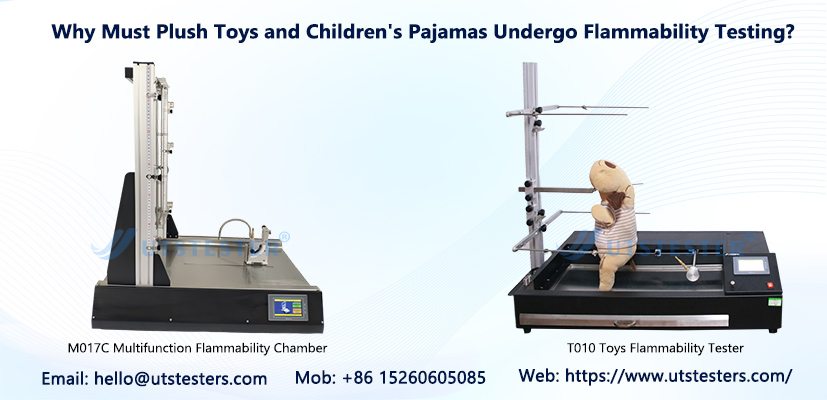
La precisión y la profesionalidad de las pruebas de inflamabilidad dependen de instrumentos de prueba textiles de alta calidad. Como empresa especializada en I+D, producción y venta de instrumentos de prueba textiles, hemos profundizado nuestra experiencia en la industria durante años. Comprendemos a fondo los requisitos fundamentales para...
Pruebas de inflamabilidad de productos infantiles
Centrándonos en las características de los materiales de los juguetes de peluche y la ropa de dormir infantil, hemos desarrollado una serie de instrumentos profesionales para pruebas de inflamabilidad que ofrecen a las empresas soluciones de prueba precisas, eficientes y confiables.
Nuestros instrumentos de prueba de inflamabilidad cumplen estrictamente con las normas nacionales e internacionales, como GB, ISO, ASTM y EN. Miden con precisión indicadores críticos como la velocidad de combustión, el tiempo de combustión y la formación de gotas fundidas en telas para peluches, rellenos y pijamas infantiles. Mediante la simulación de incendios reales, proporcionamos datos de prueba científicos y precisos para ayudar a las empresas a identificar rápidamente posibles riesgos de inflamabilidad y garantizar el cumplimiento de los productos con las normas regulatorias.
Además, ofrecemos soporte técnico integral para ayudar a las empresas a interpretar las regulaciones nacionales e internacionales, guiar los procedimientos de prueba estandarizados y completar las pruebas de forma eficiente. Esto reduce los costos de cumplimiento, mitiga los riesgos del mercado y permite a las empresas producir productos infantiles más seguros y confiables.
Resumen
La suavidad de los peluches ofrece a los niños un cálido compañero durante toda su infancia; la comodidad de los pijamas infantiles garantiza un sueño tranquilo. Sin embargo, esta suavidad nunca debe verse comprometida por los riesgos de inflamabilidad. Las pruebas de inflamabilidad no son un paso adicional, sino la última línea de defensa para proteger la vida de los niños. Representan el cumplimiento de las obligaciones legales y las responsabilidades sociales por parte de las empresas, y son un requisito esencial para el desarrollo estandarizado de la industria.
Como fabricante de instrumentos de prueba textil, mantenemos nuestro firme compromiso de profundizar nuestra experiencia en tecnología de pruebas. Desarrollamos continuamente equipos de prueba más especializados y precisos, a la vez que ofrecemos servicios de prueba superiores e integrales. Esto permite a las empresas controlar rigurosamente la calidad de sus productos y proteger la seguridad infantil.
Correo electrónico:
hello@utstesters.com
Directo: + 86 152 6060 5085
Teléfono: +86-596-7686689
Web:
www.utstesters.com


 +86 152 6060 5085
 English
 русский
 español
 português
 العربية
 Polski


 hello@utstesters.com
 hello@utstesters.com
 +86 152 6060 5085
 +8615260605085